10 Best Digital Marketing Skills Employers Want Most in 2026

digital marketing skills employers want most

The job market is changing rapidly.

A university degree alone is no longer enough to guarantee employment. Today, employers are increasingly looking for individuals who can demonstrate practical skills, solve business problems, and contribute measurable value from day one.

At the same time, businesses are investing more heavily in digital channels to attract customers, build brand awareness, and generate revenue. Consequently, the demand for skilled digital marketers continues to grow across industries.

Whether you’re a student, graduate, entrepreneur, freelancer, or career changer, understanding the digital marketing skills employers want most can help you position yourself for success in today’s digital economy.

However, many people make the mistake of learning random skills without understanding which ones are actually in demand. As a result, they spend months studying topics that offer limited career opportunities.

This guide explores the most valuable digital marketing skills employers are actively seeking, why they matter, how to learn them, and how they can help you build a successful career in Nigeria and beyond.

If you’re completely new to digital marketing, you may also find it useful to start with the Digital Marketing Guide for Nigeria, which provides a broader understanding of the industry, career opportunities, and learning pathways.

Why Digital Marketing Skills Are in High Demand

Before discussing specific skills, it is important to understand why demand continues to grow.

Consumer behaviour has changed dramatically.

Today, customers:

  • Search Google before buying.
  • Watch YouTube reviews.
  • Compare brands online.
  • Follow businesses on social media.
  • Subscribe to email newsletters.
  • Engage with content across multiple platforms.

Because of this shift, businesses need professionals who understand how to attract, engage, and convert digital audiences.

Furthermore, digital marketing offers something many traditional careers do not:

Measurable results.

Employers can clearly see:

  • Traffic generated
  • Leads acquired
  • Sales produced
  • Campaign performance
  • Return on investment

As a result, digital marketing professionals are becoming increasingly valuable.

1. Search Engine Optimization (SEO)

Among all digital marketing skills employers want most, SEO consistently ranks near the top.

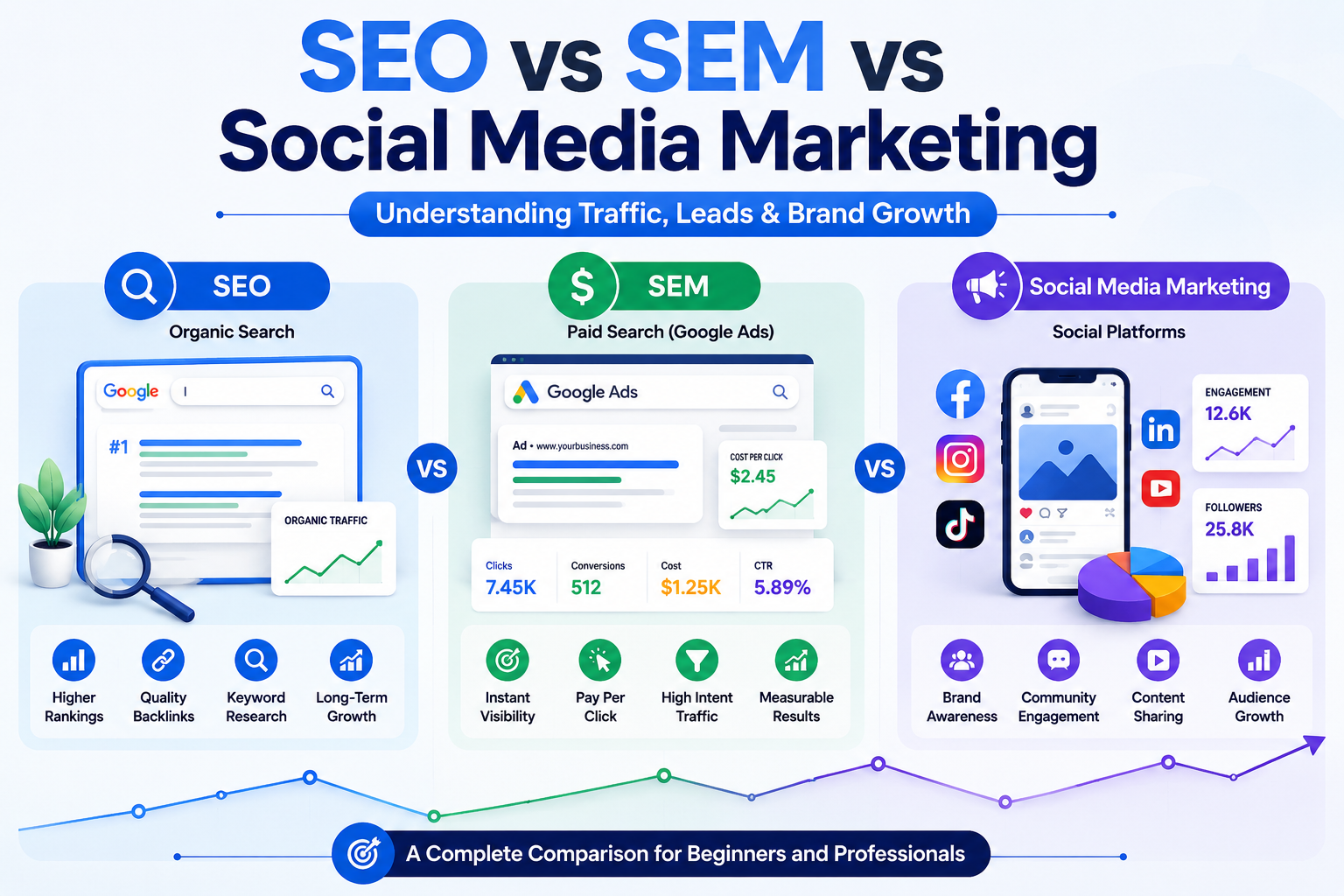
SEO is the process of improving a website’s visibility on search engines like Google.

When someone searches:

  • Best digital marketing course in Nigeria
  • Web design services
  • Social media marketing tips

SEO helps businesses appear in those search results.

Why Employers Value SEO

SEO generates long-term traffic without paying for every click.

Businesses that rank well on Google often receive:

  • More website visitors
  • More leads
  • More sales
  • Better brand credibility

Practical Skills to Learn

Focus on:

  • Keyword research
  • On-page SEO
  • Technical SEO
  • Link building
  • Content optimization
  • SEO tools

Recommended Tools

  • Google Search Console
  • Google Analytics
  • Ahrefs
  • SEMrush
  • Screaming Frog

Consequently, professionals with SEO expertise are highly sought after across industries.

2. Content Marketing

Content remains the foundation of successful digital marketing.

Without quality content, SEO struggles.

Without content, social media campaigns lose effectiveness.

Without content, email marketing becomes less valuable.

For this reason, content marketing continues to be one of the most important digital marketing skills employers want.

What Content Marketers Do

They create:

  • Blog articles
  • Social media posts
  • Case studies
  • Landing pages
  • Email campaigns
  • Video scripts

Practical Example

A digital marketing school may publish articles answering questions such as:

  • What is SEO?
  • How to become a digital marketer
  • Digital marketing salary in Nigeria

This content attracts potential students while building authority.

Therefore, strong writing and content strategy skills remain highly valuable.

3. Social Media Marketing

Businesses understand that customers spend significant amounts of time on social media.

However, simply posting content is not enough.

Employers want professionals who can create strategies that generate measurable results.

Core Social Media Marketing Skills

Learn how to:

  • Create content calendars
  • Build engagement
  • Grow audiences
  • Analyze performance
  • Develop campaigns
  • Create viral content

Platforms Worth Learning

  • Facebook
  • Instagram
  • LinkedIn
  • TikTok
  • X (Twitter)
  • YouTube

Moreover, businesses increasingly prefer marketers who understand both organic and paid social media strategies.

4. Paid Advertising (PPC)

While SEO generates long-term traffic, businesses often need immediate results.

This is where paid advertising becomes important.

Popular Advertising Platforms

  • Google Ads
  • Facebook Ads
  • Instagram Ads
  • LinkedIn Ads
  • YouTube Ads

Why Employers Want PPC Skills

Paid advertising can generate:

  • Immediate traffic
  • Fast lead generation
  • Sales growth
  • Brand awareness

However, advertising budgets can be wasted quickly if campaigns are poorly managed.

Therefore, skilled PPC professionals remain in high demand.

5. Email Marketing

Many people underestimate email marketing.

Yet it consistently delivers some of the highest returns on investment in digital marketing.

What Employers Want

They need professionals who can:

  • Build email lists
  • Create newsletters
  • Segment audiences
  • Improve open rates
  • Increase conversions

Practical Example

A business may collect emails through a free guide.

Subsequently, email campaigns nurture those leads until they are ready to buy.

As a result, email marketing remains one of the most profitable digital marketing skills.

6. Data Analytics

Modern marketing is driven by data.

Employers no longer want marketers who rely on assumptions.

Instead, they want professionals who can interpret data and make informed decisions.

Metrics You Should Understand

  • Website traffic
  • Conversion rates
  • Engagement rates
  • Click-through rates
  • Cost per acquisition
  • Return on investment

Tools to Learn

  • Google Analytics
  • Google Looker Studio
  • Search Console
  • Meta Business Suite

Consequently, marketers who understand analytics often advance faster in their careers.

7. AI and Marketing Automation

Artificial intelligence is reshaping digital marketing.

Businesses increasingly use AI tools to:

  • Generate content ideas
  • Analyze customer behaviour
  • Automate campaigns
  • Improve efficiency

Important AI Skills

Learn:

  • AI-assisted content creation
  • Prompt engineering
  • Marketing automation
  • Workflow optimization

While AI will not replace marketers, marketers who use AI effectively will likely outperform those who do not.

8. Video Marketing

Video content dominates modern digital platforms.

Consumers increasingly prefer watching content rather than reading long blocks of text.

Valuable Video Marketing Skills

Learn:

  • Video scripting
  • Video editing
  • Storytelling
  • Short-form content creation
  • YouTube optimization

Recommended Tools

  • CapCut
  • Canva
  • Adobe Premiere Pro

As video consumption continues to grow, employers increasingly value these skills.

What Do Employers Actually Look for in a Digital Marketer?

Knowing the digital marketing skills employers want most is only the first step. The more important question is what employers expect you to do with those skills.

A common mistake among beginners is to list tools and platforms on a CV without demonstrating what they can achieve with them. Saying that you know Google Analytics, Meta Ads, SEO or content marketing tells an employer very little if you cannot explain how you would use those skills to solve a business problem.

Modern employers increasingly want digital marketers who can connect marketing activities to business outcomes. They want someone who can look at a company’s objectives, understand its target audience, select appropriate channels, execute campaigns and measure the results.

For example, an employer may not simply want someone who knows how to create Instagram posts. They may need someone who can develop a social media strategy that increases engagement, generates leads and supports sales. Similarly, knowing how to write blog articles is useful, but understanding search intent, keyword research, content structure and conversion optimisation makes the skill considerably more valuable.

This is why the digital marketing skills employers want most are increasingly centred around a combination of technical knowledge, creativity, analytical thinking and business understanding.

Practical Experience Matters More Than Knowing Definitions

You may know what SEO means, understand the definition of conversion rate and be familiar with the concept of customer acquisition. However, employers need evidence that you can apply this knowledge.

Suppose you are applying for an entry-level SEO position. Instead of simply writing “SEO” on your CV, you could show that you conducted keyword research for a website, identified content gaps, optimised existing pages and monitored organic traffic through Search Console and Analytics.

That small difference changes how an employer perceives your ability.

You are no longer saying, “I have studied SEO.”

You are saying, “I understand how SEO is applied to a real website.”

The same principle applies across digital marketing. A candidate who has managed a small social media campaign, created an SEO content strategy, analysed website traffic or built an email sequence can often demonstrate greater practical value than someone who has collected several certificates without applying the knowledge.

Recent discussions of employer expectations similarly point towards the importance of data interpretation and practical execution rather than simply knowing how to operate marketing platforms.

Employers Want Marketers Who Understand the Customer

Another important skill that is sometimes overlooked is customer understanding.

Digital marketing is ultimately about influencing human behaviour. Before creating a campaign, marketers need to understand who they are targeting, what those people need, what problems they are experiencing and what might motivate them to take action.

This means learning how to develop customer personas, understand buying journeys, analyse audience behaviour and identify customer pain points.

For example, imagine a Nigerian fashion business wants to increase online sales. A marketer who simply starts publishing product pictures may generate some engagement, but a marketer who understands the customer’s journey can develop a more strategic approach.

They might discover that potential customers first discover the brand through Instagram, compare prices through WhatsApp, read reviews before purchasing and require reassurance about delivery before completing an order.

That information can influence the entire marketing strategy.

The marketer can then create educational content for discovery, testimonials for consideration, WhatsApp communication for questions and targeted promotions for conversion.

This is the difference between simply creating content and practising strategic digital marketing.

Therefore, when developing the digital marketing skills employers want most, do not focus exclusively on software. Develop your ability to understand people, interpret information and connect marketing activities to business objectives.

How to Choose the Right Digital Marketing Skills to Learn

One reason beginners struggle with digital marketing is that the field contains too many areas to master at once.

SEO, content marketing, social media, paid advertising, email marketing, analytics, copywriting, automation and AI can all become full careers on their own. Trying to master everything simultaneously can therefore result in shallow knowledge across many areas without strong competence in any of them.

A better approach is to build a T-shaped skill set.

Start by developing broad knowledge of digital marketing so you understand how the different channels work together. Then choose one or two areas to develop deeper expertise in.

For example, you might develop SEO as your primary skill and combine it with content marketing and analytics. Another learner may choose social media marketing as a core skill and develop paid advertising, copywriting and analytics alongside it.

The important thing is to build complementary skills.

SEO and content marketing work naturally together. Paid advertising and analytics complement each other. Social media and copywriting are closely connected. Email marketing becomes more powerful when combined with customer segmentation and automation.

This approach makes it easier to develop the digital marketing skills employers want most without becoming overwhelmed by the size of the industry.

Choose Skills Based on Your Career Goal

Your career objective should influence what you learn.

If you want to become an SEO specialist, prioritise keyword research, technical SEO, on-page optimisation, content strategy, link building and analytics.

If you want to work in social media, focus on content strategy, copywriting, community management, platform analytics, paid social advertising and audience research.

If you are interested in performance marketing, prioritise Google Ads, Meta Ads, conversion tracking, landing pages, analytics and campaign optimisation.

If you prefer content, develop copywriting, SEO, content strategy, storytelling, editorial planning and content analytics.

This targeted approach allows you to become employable faster because you are building a clear professional identity rather than presenting yourself as someone who knows a little about everything.

Build Proof of Your Skills

Once you select your core skills, create projects that demonstrate what you can do.

You do not need to wait for an employer to give you your first opportunity.

You could create an SEO strategy for a fictional business, manage the social media presence of a small local business, build an email campaign for a personal project or analyse the performance of a website.

Document what you did, why you made your decisions and what happened as a result.

If you do not have access to real business data, clearly identify your project as a personal or simulated project. Do not invent results simply to make your portfolio look impressive.

This approach demonstrates honesty while still allowing employers to evaluate your thinking and practical ability.

The strongest digital marketing skills employers want most are therefore not simply the skills you can list. They are the skills you can demonstrate through evidence, projects and measurable outcomes.

How to Learn Digital Marketing Skills Effectively

One of the biggest mistakes beginners make is trying to learn everything simultaneously.

Instead, follow this process.

Step 1: Learn the Fundamentals

Understand:

  • Marketing principles
  • Consumer behaviour
  • Digital channels

Step 2: Choose One Core Skill

Start with:

  • SEO
  • Social Media Marketing
  • Content Marketing

Step 3: Practice

Apply your knowledge through:

  • Personal projects
  • Blogs
  • Freelance work
  • Volunteer opportunities

Step 4: Build a Portfolio

Employers want proof.

Show:

  • Campaigns
  • Results
  • Case studies
  • Projects

Step 5: Seek Structured Learning

While self-learning is possible, many learners progress faster through structured programmes that provide mentorship, practical projects, and guidance.

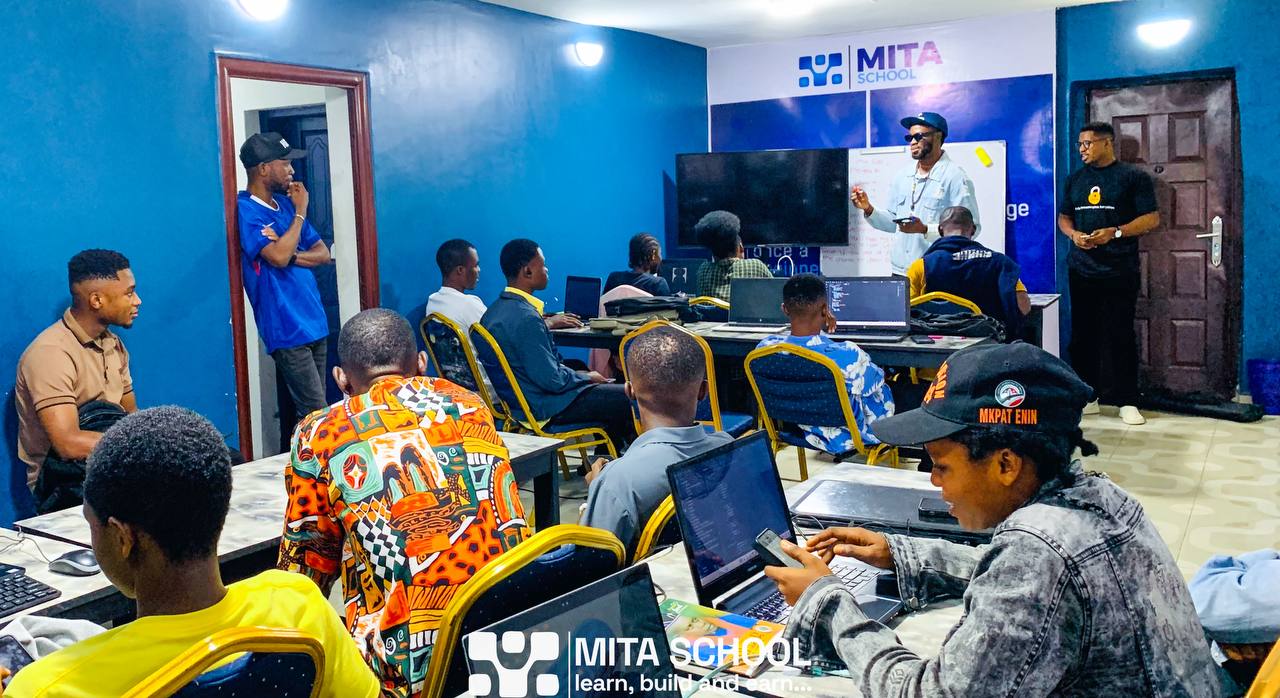
Institutions such as MITA School have become increasingly popular among aspiring tech professionals because they focus on practical digital skills that employers value. Through hands-on training, students gain experience with industry tools, real-world projects, and strategies used by modern businesses.

Why Digital Marketing Is One of the Best Tech Skills to Learn in Nigeria

Unlike many careers that require expensive equipment or years of formal education, digital marketing offers a relatively accessible pathway into the tech industry.

Benefits include:

  • Remote work opportunities
  • Freelancing opportunities
  • Entrepreneurship potential
  • Global job access
  • Low startup costs
  • Continuous demand

Furthermore, digital marketing skills complement many other tech disciplines, making them valuable regardless of your career goals.

Final Thoughts

The digital economy is creating opportunities for individuals who possess practical, in-demand skills.

Among the many tech skills available today, digital marketing remains one of the most accessible, versatile, and rewarding career paths.

Whether your goal is employment, freelancing, entrepreneurship, or remote work, developing the digital marketing skills employers want most can significantly improve your opportunities.

Most importantly, focus on learning skills that solve real business problems. Employers value professionals who can generate traffic, attract customers, increase sales, and measure results.

Start with one skill, practice consistently, build a portfolio, and continue expanding your expertise. Over time, these skills can open doors to opportunities not only in Nigeria but across the global digital marketplace.

For those seeking a structured pathway, practical projects, mentorship, and industry-relevant training, MITA School provides an environment where aspiring professionals can develop the digital skills needed to thrive in today’s competitive economy.

Frequently Asked Questions

Which Digital Marketing Skill Pays the Most?

There is no single answer.

However, professionals specializing in SEO, paid advertising, analytics, and marketing strategy often command higher salaries due to the measurable impact they deliver.

Can I Learn Digital Marketing Without a Degree?

Yes.

Many employers prioritize practical skills and demonstrated results over academic qualifications.

How Long Does It Take to Learn Digital Marketing?

Most beginners can develop foundational skills within three to six months.

However, mastery requires continuous learning and practical experience.

Is Digital Marketing a Good Career in Nigeria?

Absolutely.

Demand continues to increase as businesses invest more heavily in digital channels.

Which Skill Should Beginners Learn First?

SEO, Content Marketing, and Social Media Marketing are excellent starting points because they build foundational knowledge that supports other marketing disciplines.

Shalom Peter

I am a results-driven SEO Specialist, Social Media Manager, and Digital Marketing Strategist focused on helping brands rank higher on Google, increase organic traffic, and grow their online presence through SEO-driven content and strategic digital marketing.

I specialize in SEO content writing, keyword research, content marketing, social media management, TikTok growth strategy, and digital brand positioning. I create search-optimized content and audience-focused marketing campaigns designed to improve search rankings, boost engagement, increase visibility, and drive conversions across Google and social media platforms.

With experience working with EdTech brands, tech communities, and growing businesses, I help brands build authority online through content strategy, SEO optimization, and high-performing digital campaigns that connect with the right audience.

Leave a Reply

Your email address will not be published. Required fields are marked *