Quick Answer: SEO focuses on earning organic search traffic, SEM uses paid search advertising to generate immediate visibility, while social media marketing helps businesses build awareness, engagement and relationships with their audiences. There is no single strategy that is best for every business. The right choice depends on your goals, budget, audience, industry and how quickly you need results.
Table of Contents
- What Is the Difference Between SEO, SEM and Social Media Marketing?
- What Is SEO and How Does It Work?
- What Is SEM and How Does It Work?
- What Is Social Media Marketing?
- SEO vs SEM vs Social Media Marketing: Key Differences
- SEO vs SEM: Which Is Better?
- SEO vs Social Media Marketing: Which Is Better?
- SEM vs Social Media Marketing: Which Is Better?
- Which Digital Marketing Strategy Is Best for a New Business?
- Which Strategy Is Best for Nigerian Businesses?
- How Much Do SEO, SEM and Social Media Marketing Cost?
- How Long Does Each Strategy Take to Produce Results?
- Should You Use SEO, SEM and Social Media Marketing Together?
- How to Choose the Right Digital Marketing Strategy
- How to Learn SEO, SEM and Social Media Marketing
- Frequently Asked Questions
- Conclusion
SEO vs SEM vs Social Media Marketing: What Is the Difference?
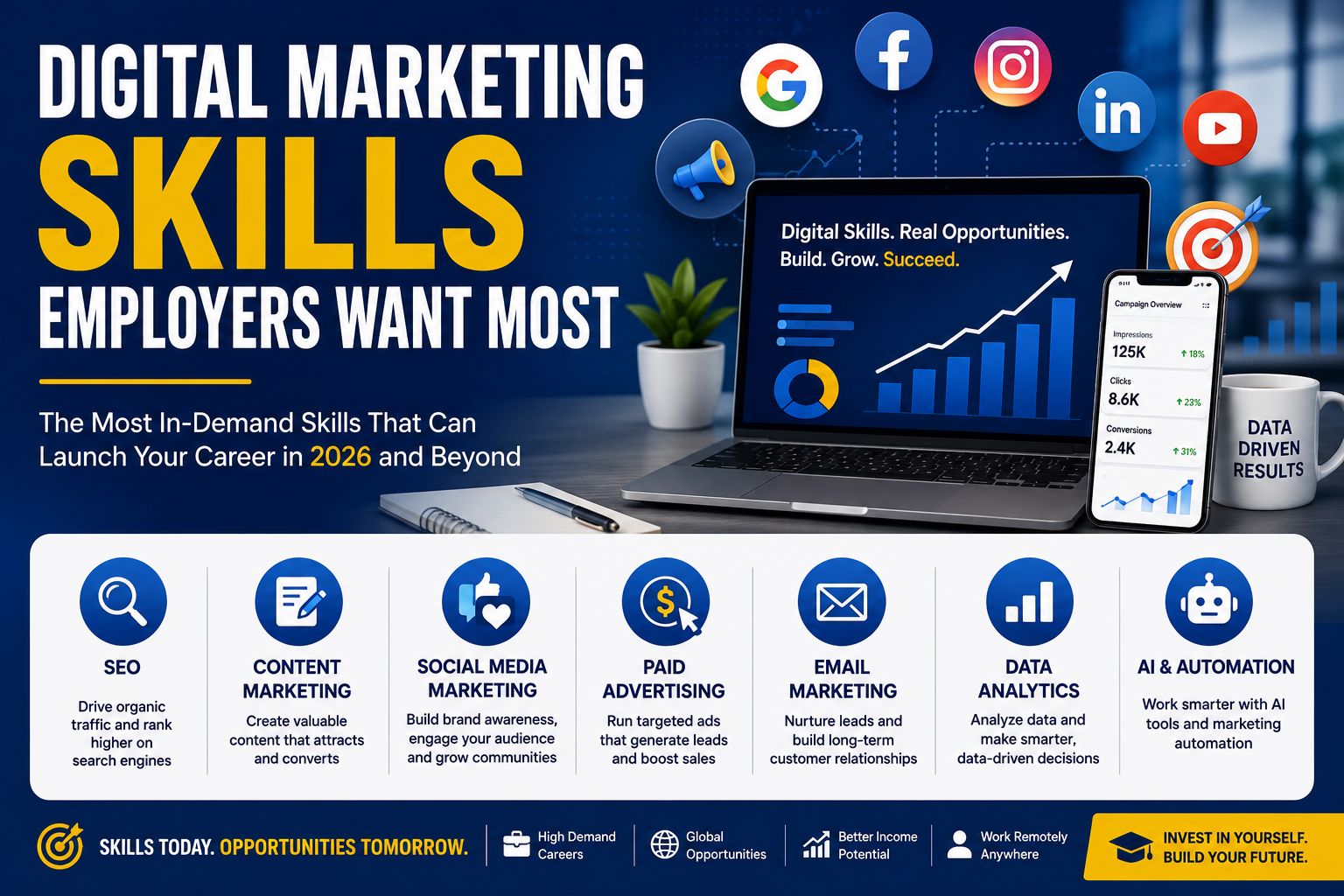
When comparing SEO vs SEM vs Social Media Marketing, the biggest difference is how each strategy helps a business reach potential customers. SEO focuses primarily on earning visibility in organic search results, SEM uses paid search advertising to reach people actively searching for specific products or services, while social media marketing uses platforms such as Facebook, Instagram, LinkedIn, TikTok and YouTube to build awareness, engagement and relationships with audiences.
These strategies are not necessarily competitors. In many cases, the most effective digital marketing strategy combines all three. A business can use SEO to attract long-term organic traffic, SEM to generate immediate visibility for high-intent searches, and social media marketing to build a community around the brand and keep customers engaged.
For example, imagine a digital marketing school in Nigeria. SEO could help the school appear when someone searches for “digital marketing course in Nigeria.” SEM could allow the school to pay for advertisements that appear when prospective students search for related courses. Social media marketing could then help the school showcase student experiences, educational content, events and success stories on platforms where potential students spend their time.
The important question, therefore, is not simply SEO vs SEM vs Social Media Marketing: which one is best? The better question is which combination is most appropriate for your business goals, audience, budget and timeline?
That is the decision this guide will help you make.
What Is SEO?
Search Engine Optimization (SEO) is the process of improving a website’s visibility in search engines such as Google, Bing, and AI-powered search platforms.
The objective is simple:
When people search for information related to your products, services, or expertise, your website should appear prominently in the search results.
For example, when someone searches:
- Best digital marketing course in Nigeria
- How to learn SEO
- Affordable website design services
SEO helps relevant websites appear in those search results organically.
Search Engine Optimization, commonly known as SEO, is the process of improving a website and its content so that it can appear more prominently in organic search engine results.
Unlike paid advertising, SEO does not require a business to pay Google every time someone clicks on its search result. Instead, businesses invest in content, technical improvements, keyword targeting, user experience and authority-building activities that can help their pages rank organically.
For Nigerian businesses, SEO can be particularly valuable because customers increasingly use search engines to research businesses before making purchasing decisions.
Someone might search for:
- “best tech school in Uyo”
- “digital marketing course in Nigeria”
- “UI/UX design course in Uyo”
- “best wedding car hire in Lagos”
- “social media marketing agency in Abuja”
A business that has invested in SEO has an opportunity to appear when potential customers are actively looking for those products or services.
The major advantage of SEO
The biggest strength of SEO is its ability to generate long-term organic visibility.
However, SEO is not an overnight strategy. A business may need to invest consistently in quality content, technical SEO, keyword research and website improvements before seeing substantial results.
How SEO Works
Search engines use complex algorithms to determine which pages deserve to rank for specific searches.
SEO focuses on optimizing factors such as:
- Content quality
- Keyword relevance
- User experience
- Website speed
- Mobile responsiveness
- Backlinks
- Technical performance
Benefits of SEO
Long-Term Traffic
Unlike paid advertising, SEO can continue generating traffic months or even years after content is published.
Higher Trust
Many users trust organic search results more than advertisements.
Better ROI Over Time
Although SEO requires upfront effort, the long-term cost per lead is often lower than paid advertising.
AI Search Visibility
Modern SEO now influences visibility in AI-powered search experiences, making it even more valuable.
Challenges of SEO
SEO is highly rewarding, but it requires:
- Patience
- Consistency
- Technical understanding
- Continuous optimization
Results rarely happen overnight.
Businesses that expect immediate rankings often abandon SEO before experiencing its true benefits.
What Is SEM?
Search Engine Marketing (SEM) refers to paid marketing efforts on search engines.
The most common form of SEM is Google Ads.
Instead of earning rankings organically, businesses pay to appear at the top of search results.
When someone searches for a keyword, advertisers bid for visibility.
The search engine then determines which ads appear based on factors such as:
- Bid amount
- Ad relevance
- Landing page quality
- Expected click-through rate
Search Engine Marketing, or SEM, generally refers to using paid search advertising to increase a business’s visibility on search engines.
For example, when someone searches for a service on Google, they may see sponsored results above or alongside organic results.
A business can pay to have its advertisement displayed for relevant searches.
This makes SEM particularly useful when a company wants to reach potential customers quickly.
For example, a training school launching a new digital marketing class may use paid search advertising to reach people searching for relevant courses instead of waiting several months for SEO content to gain organic visibility.
The major advantage of SEM
SEM provides speed and targeting.
A business can select keywords, define audiences, set budgets and measure campaign performance.
However, SEM requires ongoing advertising expenditure. Once the campaign stops receiving funding, the paid visibility generally stops as well.
How SEM Works
Imagine a digital marketing school launching a new programme.
Rather than waiting months for SEO results, the school can immediately place ads targeting searches like:
- Digital marketing training
- SEO course near me
- Learn digital marketing online
This creates instant visibility.
Benefits of SEM
Immediate Results
Traffic can begin arriving within hours of launching a campaign.
Precise Targeting
Advertisers can target:
- Locations
- Demographics
- Devices
- Interests
- Keywords
Measurable Performance
Every click, conversion, and lead can be tracked.
Challenges of SEM
Costs Can Increase
Competitive industries often require higher advertising budgets.
Traffic Stops When Spending Stops
Unlike SEO, SEM does not create long-term assets.
Once advertising ends, visibility disappears.
This is why many businesses combine SEM with SEO rather than relying exclusively on paid traffic.
What Is Social Media Marketing?
Social Media Marketing involves using social platforms to attract attention, engage audiences, build communities, and drive business growth.
Popular platforms include:
- TikTok
- YouTube
- X (formerly Twitter)
Unlike search marketing, social media focuses on audience engagement rather than search intent.
How Social Media Marketing Works
People use social media primarily to:
- Connect
- Learn
- Be entertained
- Discover trends
Businesses create content that attracts attention and encourages interaction.
This may include:
- Educational posts
- Videos
- Stories
- Reels
- Live sessions
- User-generated content
Benefits of Social Media Marketing
Brand Awareness
Social media can expose brands to thousands or even millions of people.
Community Building
Businesses can engage directly with customers.
Viral Potential
High-quality content can spread rapidly.
Customer Relationships
Social media creates opportunities for direct conversations.
Challenges of Social Media Marketing
Algorithm Changes
Platforms frequently change how content is distributed.
Content Demands
Success requires consistent content creation.
Unpredictable Reach
Organic visibility can fluctuate significantly.
SEO vs SEM vs Social Media Marketing: Key Differences
| Factor | SEO | SEM | Social Media Marketing |
|---|---|---|---|
| Main purpose | Organic visibility | Paid search visibility | Awareness, engagement and community |
| Traffic source | Search engines | Paid search | Social platforms |
| Speed | Slow to moderate | Fast | Moderate |
| Long-term value | High | Depends on continued spending | High when community is built |
| Cost model | Investment in content/SEO | Pay for advertising | Organic, paid or both |
| Best for | Long-term visibility | Immediate demand | Brand and audience growth |
| Measurement | Rankings, traffic, conversions | Clicks, conversions, CPA | Reach, engagement, leads, conversions |
The important point is that SEO vs SEM vs Social Media Marketing is not a competition where one strategy automatically wins.
Each strategy addresses a different stage of the customer journey.
| Factor | SEO | SEM | Social Media Marketing |
|---|---|---|---|
| Cost | Lower long-term cost | Requires advertising budget | Can be organic or paid |
| Speed | Slow | Immediate | Moderate |
| Traffic Source | Search engines | Paid search | Social platforms |
| Trust Level | Very high | Moderate | High |
| Long-Term Value | Excellent | Limited | Moderate |
| Brand Awareness | Good | Limited | Excellent |
| Lead Generation | Strong | Very Strong | Strong |
| Sustainability | High | Low | Medium |
Which Strategy Delivers the Highest ROI?
The answer depends on your objectives.
Short-Term ROI
SEM typically wins.
Businesses needing immediate leads often benefit from paid search campaigns.
Long-Term ROI
SEO generally provides the strongest long-term return on investment.
Once rankings are established, traffic continues without paying for every visitor.
Brand Awareness ROI
Social Media Marketing is often the strongest option.
It helps brands stay visible and build relationships.
Combined ROI
The highest-performing businesses usually combine all three channels.
Rather than choosing one, they use each strategically.
When Should You Use SEO?
SEO is ideal when:
- You want sustainable growth
- You want long-term visibility
- You want to build authority
- You publish educational content
- You want lower acquisition costs over time
Businesses investing in SEO today often benefit for years.
When Should You Use SEM?
SEM works best when:
- Launching a new product
- Promoting an event
- Generating leads quickly
- Testing new offers
- Entering competitive markets
SEM excels when speed matters.
When Should You Use Social Media Marketing?
Social media is ideal when:
- Building brand awareness
- Growing communities
- Engaging customers
- Creating demand
- Promoting content
Businesses with strong social media communities often enjoy higher customer loyalty.
Why Smart Businesses Use All Three
The most successful organizations do not ask:
“Which channel is best?”
Instead, they ask:
“How can these channels work together?”
A typical strategy might look like this:
- SEO attracts organic traffic.
- SEM generates immediate leads.
- Social media nurtures relationships.
- Email marketing converts prospects.
This integrated approach creates sustainable growth.
Understanding how these channels connect is one of the reasons comprehensive digital marketing training has become increasingly valuable. At MITA School, students learn how different marketing channels support one another rather than treating them as isolated tactics.
Career Opportunities in SEO, SEM, and Social Media Marketing
The demand for digital marketers continues to grow.
Popular career paths include:
SEO Specialist
Responsible for improving search visibility.
PPC Specialist
Manages Google Ads and paid campaigns.
Social Media Manager
Develops and executes social media strategies.
Content Marketing Specialist
Creates content that drives traffic and engagement.
Digital Marketing Manager
Coordinates multiple marketing channels.
Professionals who understand SEO, SEM, and Social Media Marketing together are often more employable and command higher salaries.
Those interested in mastering these skills can explore the Digital Marketing Course at MITA School, where practical training focuses on real-world marketing applications rather than theory alone.
Can SEO, SEM and Social Media Marketing Work Together?
Instead of treating SEO vs SEM vs Social Media Marketing as three completely separate options, businesses should understand how they can complement one another.
For example:
SEO attracts people searching organically.
SEM captures immediate search demand.
Social media marketing creates awareness and keeps the brand connected with its audience.
A customer might first discover a company through Instagram, later search for the company on Google, read an SEO article and eventually click a paid advertisement before making a purchase.
The customer journey is rarely as simple as seeing one advertisement and buying immediately.
How to Choose the Right Digital Marketing Strategy
1. What is your goal?
Are you trying to generate leads, increase sales, build awareness or establish authority?
2. Where does your audience spend time?
Do they search Google, watch TikTok videos, use Instagram or spend time on LinkedIn?
3. How quickly do you need results?
If you need immediate traffic, SEM may help. If you are building long-term visibility, SEO may be more appropriate.
4. What is your budget?
Your available resources will influence how much you can invest in paid advertising, content production and SEO.
5. Can you combine strategies?
In many cases, the answer is yes.
How to Get Started With Digital Marketing
If you are a beginner, do not attempt to master SEO, SEM and social media marketing simultaneously.
Start by understanding the fundamentals of digital marketing.
Then choose one primary discipline.
For example, you might begin with social media marketing because you already understand platforms such as Instagram and TikTok. You can then learn content strategy, analytics, advertising and conversion.
After gaining confidence, you can add SEO or paid advertising to your skill set.
The goal is to become competent first, then versatile.
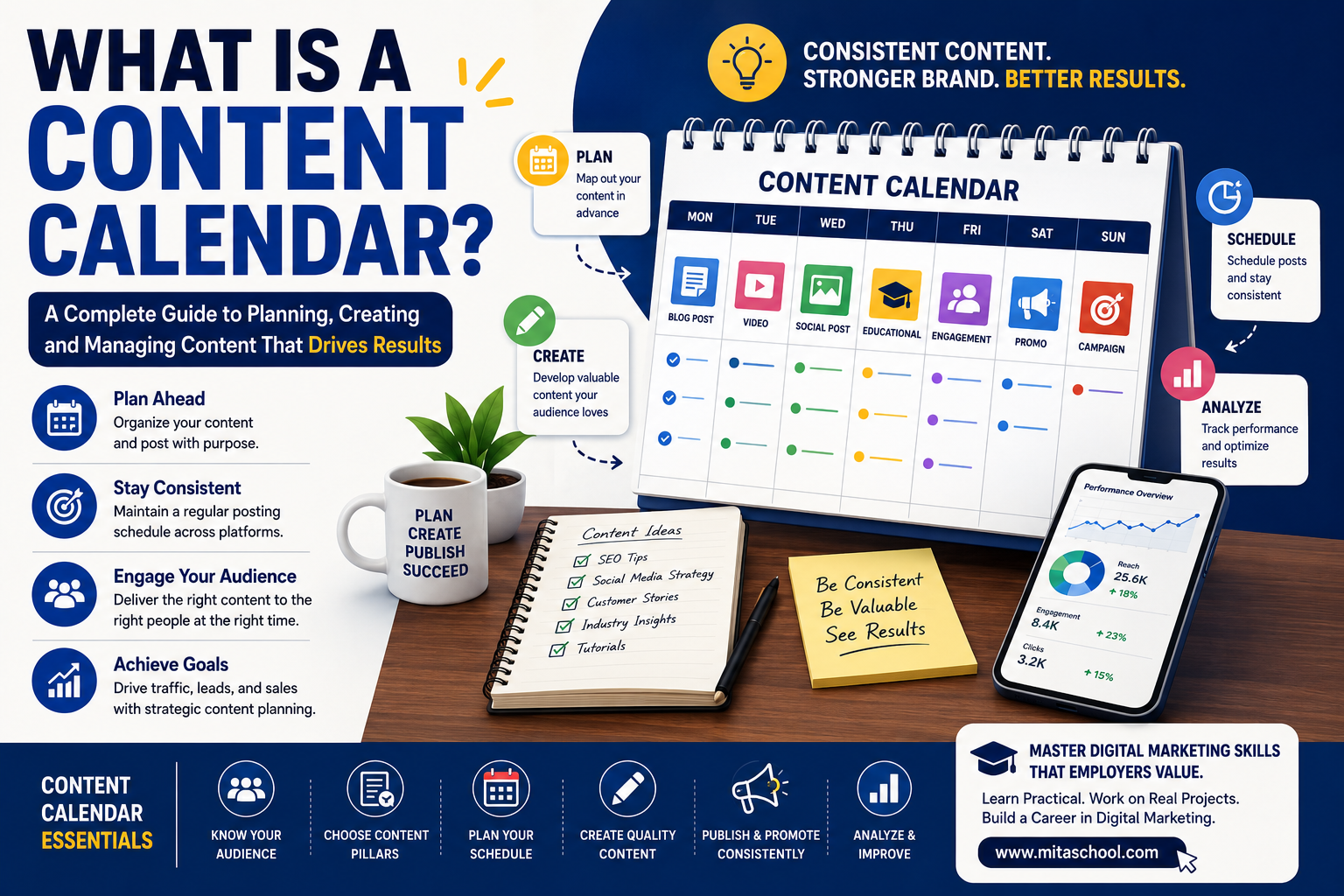
Create practical projects as you learn. Instead of simply watching tutorials, develop a mock campaign for a Nigerian business, create a content calendar, conduct keyword research, design an advertising campaign and analyse the results.
That gives you something tangible to demonstrate to employers or clients.
Learn Social Media Marketing Properly at MITA School
Learning social media marketing from random videos and scattered online tutorials can give you information, but information alone does not necessarily make you job-ready.
To become effective, you need to understand why a strategy works, how to develop a campaign, how to create content for different audiences, how to interpret analytics and how to connect social media activity to actual business objectives.
This is where structured training can make a significant difference.
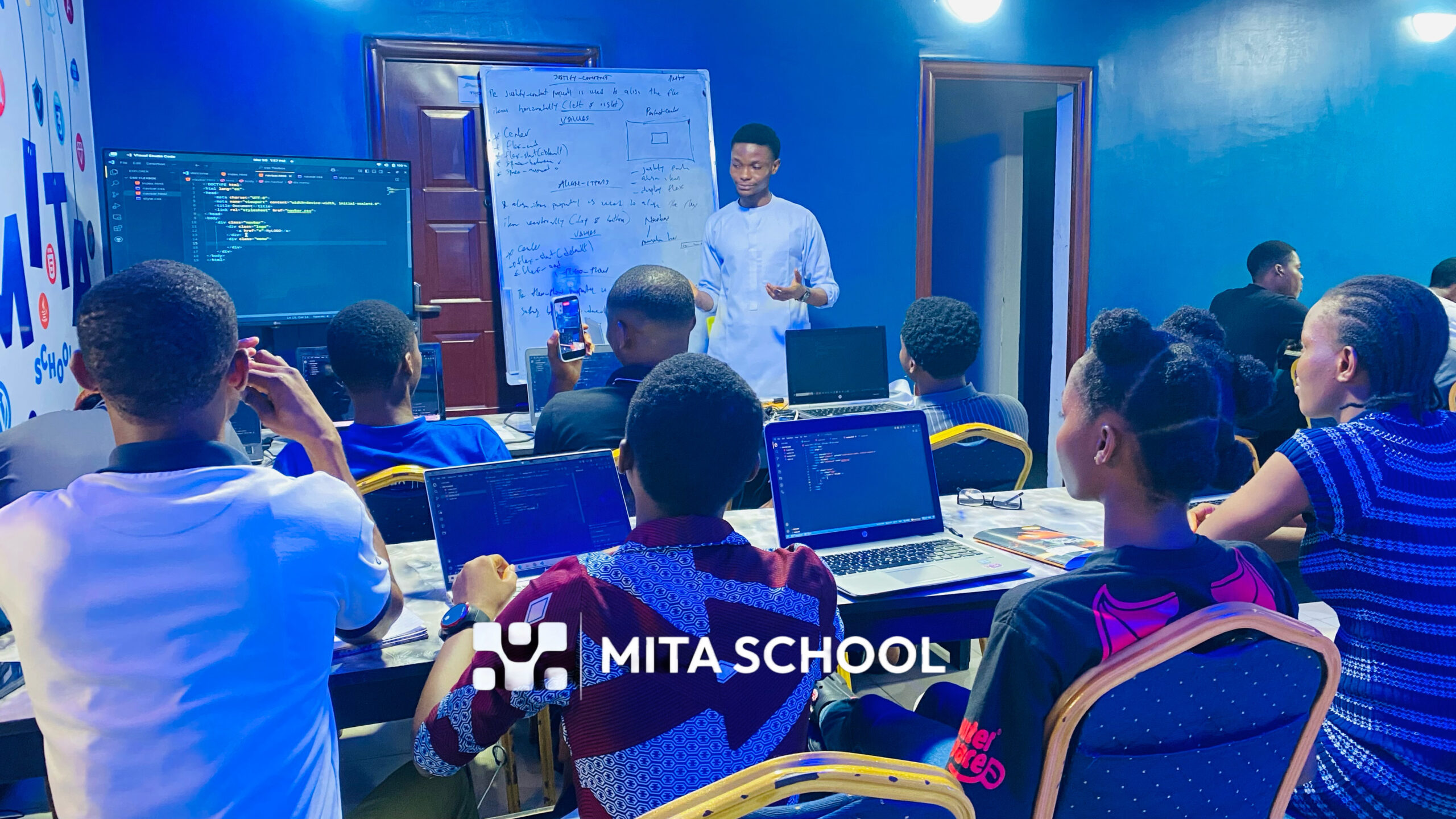
MITA School provides practical technology and digital skills training for learners who want to develop skills they can apply in real-world environments. Its digital marketing training can help learners build a stronger understanding of areas such as social media marketing, content strategy, digital advertising and other essential marketing skills.
Rather than learning social media marketing as simply “posting on Instagram,” learners should understand audience research, content planning, campaign development, engagement, analytics and conversion.
For someone in Nigeria who wants to build social media marketing into a professional career, structured training combined with hands-on practice can provide a clearer learning path.
The goal should not simply be to complete a course. It should be to leave with practical knowledge, projects and the confidence to apply what you have learned to a real business.
Frequently Asked Questions
Is SEO Better Than SEM?
Neither is inherently better.
SEO is generally stronger for long-term growth because it creates sustainable visibility and ongoing traffic. However, it takes time to produce results.
SEM, on the other hand, provides immediate visibility and can generate leads quickly. Businesses launching products or running promotions often benefit from SEM while simultaneously building their SEO strategy.
The most effective approach usually combines both.
Is Social Media Marketing Part of SEO?
No.
SEO and Social Media Marketing are separate disciplines.
SEO focuses on improving visibility in search engines, while social media marketing focuses on building engagement and awareness on social platforms.
However, social media can indirectly support SEO by increasing content visibility, attracting backlinks, and driving traffic to websites.
Which Is Cheaper: SEO or SEM?
SEO often becomes more cost-effective over time.
Although creating content and optimizing websites requires investment, organic traffic continues without paying for each visitor.
SEM requires ongoing spending because every click has a cost.
Businesses with limited budgets often prioritize SEO while using SEM strategically.
How Long Does SEO Take to Work?
Most SEO campaigns require three to six months before significant improvements appear.
Highly competitive industries may take longer.
Factors influencing timelines include:
- Competition
- Website authority
- Content quality
- Technical optimization
- Backlink profile
SEO should be viewed as a long-term investment rather than a quick fix.
Can a Business Succeed Using Only Social Media?
Some businesses can, particularly those with highly visual products.
However, relying solely on social media creates risks because algorithms change frequently.
Combining social media with SEO and email marketing creates a more stable growth strategy.
Which Skill Should Beginners Learn First: SEO, SEM, or Social Media Marketing?
For most beginners, SEO is an excellent starting point because it develops:
- Research skills
- Content creation skills
- Technical understanding
- Marketing strategy knowledge
From there, learning SEM and Social Media Marketing becomes easier.
Are SEO, SEM, and Social Media Marketing Still Relevant in the Age of AI?
Absolutely.
AI is changing how people discover information, but it is not replacing digital marketing.
In fact, AI is increasing demand for marketers who understand:
- Search behaviour
- Content strategy
- Paid advertising
- Audience engagement
The platforms may evolve, but the principles behind SEO, SEM, and Social Media Marketing remain essential.
Final Thoughts
The debate between SEO, SEM, and Social Media Marketing often misses the bigger picture.
Each channel serves a different purpose.
SEO builds long-term authority and organic visibility.
SEM delivers immediate traffic and measurable lead generation.
Social Media Marketing strengthens brand awareness and customer relationships.
The most successful marketers and businesses understand how to combine these channels into a cohesive strategy rather than relying on one alone.
If you’re serious about building a strong foundation in digital marketing, exploring a comprehensive resource such as the Complete Digital Marketing Guide for Nigeriacan help you understand how these channels fit into the broader marketing ecosystem. And if you’re ready to move beyond theory and develop practical, job-ready skills, structured training through MITA School can provide the guidance, mentorship, and hands-on experience needed to thrive in today’s digital economy
Related
Shalom Peter
I am a results-driven SEO Specialist, Social Media Manager, and Digital Marketing Strategist focused on helping brands rank higher on Google, increase organic traffic, and grow their online presence through SEO-driven content and strategic digital marketing.
I specialize in SEO content writing, keyword research, content marketing, social media management, TikTok growth strategy, and digital brand positioning. I create search-optimized content and audience-focused marketing campaigns designed to improve search rankings, boost engagement, increase visibility, and drive conversions across Google and social media platforms.
With experience working with EdTech brands, tech communities, and growing businesses, I help brands build authority online through content strategy, SEO optimization, and high-performing digital campaigns that connect with the right audience.