
If your business is on social media but you’re not getting engagement, leads, or sales, you’re not alone.
Every day, thousands of Nigerian businesses post flyers, product photos, and promotional content on Facebook, Instagram, TikTok, LinkedIn, and X. Yet many of these businesses struggle to achieve meaningful results.
The reason is simple.
Most businesses are posting content. Very few are implementing a social media marketing strategy.
Successful brands don’t just post. They understand their audience, create valuable content, build communities, analyze performance, and continuously improve their approach.
Today, social media has become one of the most powerful digital marketing channels available to businesses in Nigeria. Whether you’re running a fashion brand, tech startup, real estate company, catering business, school, or consulting firm, social media can help you reach customers, establish authority, and generate revenue.
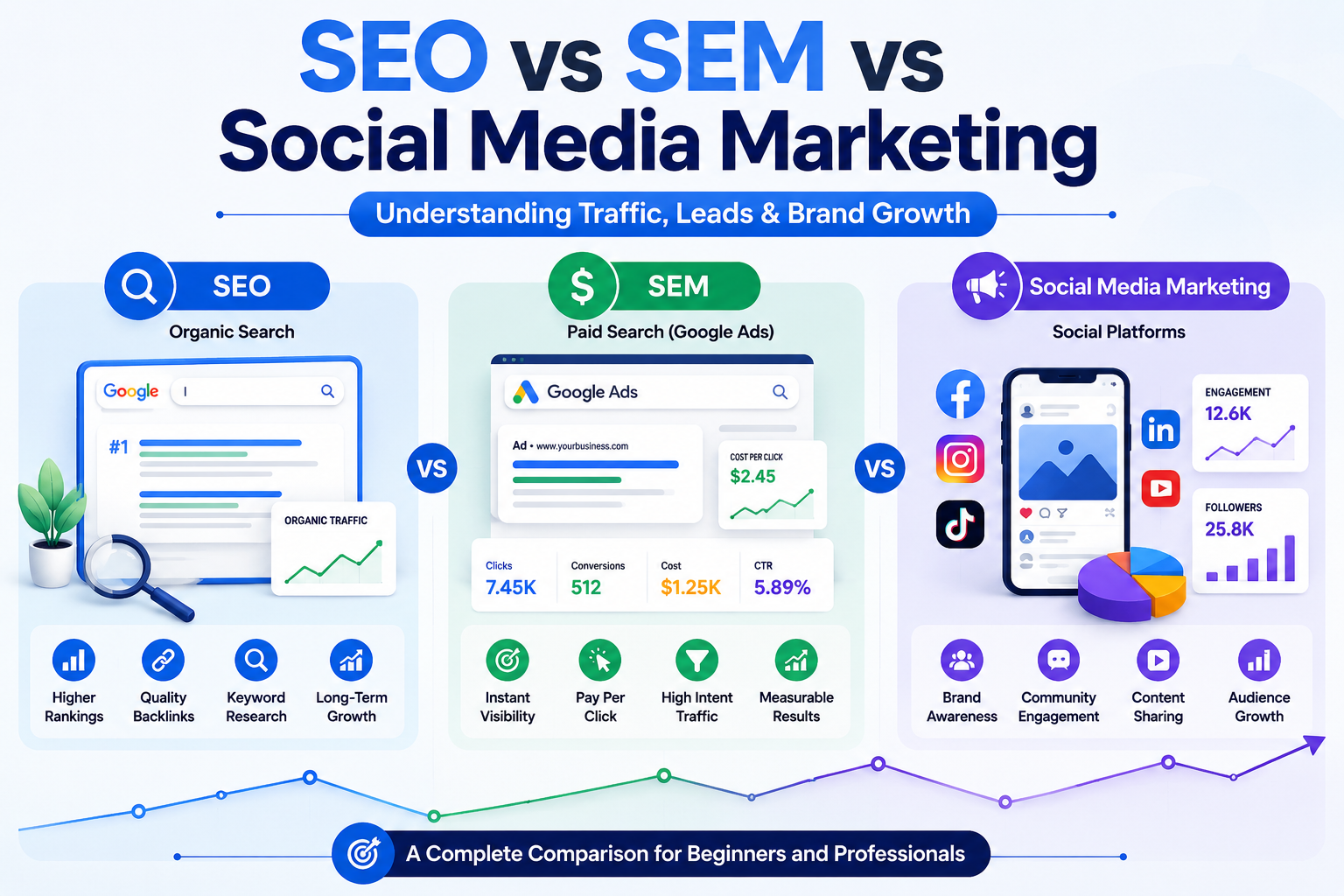
However, social media marketing works best when it’s part of a broader digital marketing strategy. That’s why understanding how social media connects with SEO, content marketing, email marketing, and paid advertising is essential. If you’re looking for a comprehensive understanding of how these channels work together, the Complete Digital Marketing Guide for Nigeria provides a deeper foundation for aspiring marketers and business owners.
What Is Social Media Marketing?
Social Media Marketing (SMM) is the process of using social media platforms to promote a brand, engage audiences, build trust, generate leads, and increase sales.
Unlike traditional advertising, social media marketing focuses on creating meaningful relationships with customers.
The goal isn’t simply to sell.
The goal is to:
- Build awareness
- Create trust
- Provide value
- Solve problems
- Encourage engagement
- Drive business growth
The brands that win on social media are usually the brands that educate, entertain, inspire, and help their audience consistently.
How Social Media Marketing Works for Nigerian Businesses
Social media marketing works by connecting a business with the right audience through the platforms they already use. However, successful social media marketing is not simply about publishing content every day. It involves understanding the customer, creating relevant content, building relationships, driving action and measuring the results.
For Nigerian businesses, this process can look different depending on the industry, target audience and business objective. A fashion brand may rely heavily on Instagram and TikTok to showcase products, while a technology company may use LinkedIn to reach professionals and YouTube to publish educational content. A local restaurant may depend on Instagram, Facebook and WhatsApp to attract customers within a specific location.
The first stage is audience research. Before developing a social media marketing strategy, businesses need to understand who they are trying to reach. This includes identifying their customers’ age, location, interests, challenges, purchasing behaviour and reasons for choosing one brand over another.
The second stage is content development. Once the audience is understood, marketers can create content that addresses their questions, solves problems and communicates the value of the product or service. This may include educational posts, short-form videos, testimonials, product demonstrations, behind-the-scenes content and promotional campaigns.
The third stage is engagement and community building. Social media marketing works best when businesses treat social platforms as communication channels rather than digital billboards. Responding to comments, answering questions, acknowledging feedback and participating in relevant conversations can help businesses develop stronger relationships with their audiences.
The fourth stage is conversion. The ultimate objective of social media marketing is not always to increase followers. Depending on the business, the desired outcome may be website visits, enquiries, registrations, bookings, purchases or leads. Effective marketers therefore create clear calls-to-action that guide audiences towards the next step.
Finally, businesses need to measure and optimise performance. Analytics can reveal which content generates engagement, which campaigns produce leads and which platforms deliver the strongest results. Marketers can then use these insights to improve future campaigns.
This process demonstrates why social media marketing requires more than creativity. It combines audience research, content strategy, copywriting, communication, analytics and business thinking.
How to Create a Social Media Marketing Strategy
A social media marketing strategy gives your business a clear direction instead of leaving content creation to guesswork. Without a strategy, businesses may publish frequently but struggle to understand whether their activities are actually contributing to growth.
Start by defining your primary objective.
Your objective could be to increase brand awareness, generate leads, drive website traffic, increase sales, promote a new product or build a community. The objective determines the type of content you create and the metrics you monitor.
Next, identify your target audience. Avoid using broad descriptions such as “everyone in Nigeria.” A more useful audience definition might be “young Nigerian professionals between 22 and 35 who are interested in technology and career development.”
After defining the audience, select the platforms where that audience is most likely to be active. You do not need to create an account on every platform. Effective social media marketing is often more successful when a business focuses its resources on two or three relevant platforms.
The next step is developing content pillars. These pillars give your social media marketing strategy structure and prevent your content from becoming repetitive. A business could use educational content, customer stories, entertainment, behind-the-scenes content and promotional content as its main pillars.
Finally, establish a publishing schedule and measurement system. Decide how frequently you will publish, who will create the content, when posts will be published and which metrics will determine success.
A practical social media marketing strategy should therefore answer five questions:
Who are we trying to reach?
What do they need from us?
Where can we reach them?
What action do we want them to take?
How will we measure whether the strategy is working?
When these questions are answered clearly, social media becomes a structured marketing channel rather than simply another place to post content.
Why Social Media Marketing Is Important for Nigerian Brands
Consumer behaviour has changed significantly.
Before purchasing a product, choosing a service provider, enrolling in a course, or hiring a professional, people often:
- Search online
- Check social media profiles
- Read reviews
- Watch videos
- Compare competitors
If your brand isn’t visible where customers spend their time, you’re losing opportunities.
Social media marketing helps businesses:
- Reach larger audiences
- Increase brand awareness
- Build customer trust
- Generate leads
- Drive website traffic
- Improve customer retention
- Create loyal communities
For small businesses, social media levels the playing field.
A startup with a smart strategy can compete with larger brands without spending millions on advertising.
Step 1: Define Your Target Audience
The biggest mistake many Nigerian businesses make is trying to market to everyone.
When you market to everyone, you connect with no one.
Before creating content, ask yourself:
Who are my ideal customers?
Consider:
- Age
- Gender
- Occupation
- Location
- Interests
- Income level
- Challenges
- Goals
Practical Example
If MITA School is promoting a Digital Marketing Course, potential audiences may include:
- Students
- NYSC members
- Graduates
- Business owners
- Career changers
- Freelancers
Each audience segment requires slightly different messaging.
Understanding your audience helps you create content that speaks directly to their needs.
Step 2: Choose the Right Social Media Platforms
Not every platform is suitable for every business.
One of the most effective social media marketing strategies is focusing on platforms where your audience is most active.
Best for:
- Small businesses
- Local brands
- Community building
- Paid advertising
Best for:
- Fashion
- Beauty
- Food
- Lifestyle brands
- Educational content
Best for:
- Professional services
- B2B marketing
- Technology companies
- Tech schools
TikTok
Best for:
- Brand awareness
- Viral content
- Storytelling
- Younger audiences
YouTube
Best for:
- Tutorials
- Educational content
- Product demonstrations
- Thought leadership
Practical Tip
Don’t try to dominate every platform.
Choose two or three platforms and master them first.
Step 3: Build Strong Content Pillars
One reason many businesses run out of content ideas is because they lack content pillars.
Content pillars are the main categories around which your content is built.
Educational Content
Examples:
- How-to guides
- Tips and tutorials
- Industry insights
- Problem-solving content
Educational content typically generates the highest trust.
Inspirational Content
Examples:
- Success stories
- Testimonials
- Student achievements
- Transformation journeys
Behind-the-Scenes Content
Examples:
- Team activities
- Workplace culture
- Project development
- Training sessions
Promotional Content
Examples:
- Product launches
- Course registrations
- Discounts
- Events
Recommended Content Formula
- 70% Educational
- 20% Engagement
- 10% Promotional
This balance helps maintain audience interest without appearing overly sales-focused.
Step 4: Create Content That People Actually Want to Engage With
Many businesses create content based on what they want to say.
Successful marketers create content based on what audiences want to know.
Ask:
- What questions do customers frequently ask?
- What problems do they face?
- What skills do they want to learn?
- What information would help them succeed?
High-Performing Content Types
Short Videos
Videos currently dominate social media.
Examples:
- Tutorials
- Tips
- Demonstrations
- Student projects
Carousel Posts
Excellent for:
- Educational content
- Checklists
- Step-by-step guides
Infographics
Useful for presenting data and statistics visually.
Case Studies
People trust real examples.
Share:
- Client results
- Student success stories
- Project outcomes
Step 5: Master Social Media Copywriting
Good design attracts attention.
Good copy drives action.
Every post should include:
A Strong Hook
Example:
“90% of Nigerian businesses make this social media mistake.”
Valuable Information
Deliver practical insights.
A Clear Call-to-Action
Examples:
- Save this post
- Share with a friend
- Leave a comment
- Visit our website
The first few words of your content are often the difference between someone scrolling past and someone paying attention.
Step 6: Use Social Media Marketing Tools
Professional marketers rely on tools.
Canva
For graphic design.
Meta Business Suite
For scheduling and analytics.
CapCut
For editing videos.
Google Analytics
For measuring website traffic.
ChatGPT
For content planning and idea generation.
Using the right tools improves efficiency and consistency.
Step 7: Leverage Paid Advertising
Organic reach is valuable, but paid advertising accelerates growth.
Platforms such as Facebook and Instagram Ads allow businesses to target:
- Locations
- Interests
- Demographics
- Behaviours
Example
A digital marketing course can target:
- Students
- Graduates
- Entrepreneurs
- Job seekers
within specific cities or states.
This increases the likelihood of generating quality leads.
Step 8: Track Your Performance
If you aren’t measuring results, you’re guessing.
Monitor:
- Reach
- Engagement
- Website clicks
- Lead generation
- Conversion rates
- Follower growth
Data helps you identify what works and what needs improvement.
Successful social media marketers make decisions based on evidence, not assumptions.
Common Social Media Marketing Mistakes Nigerian Brands Should Avoid
Posting Only When You Want Sales
Many businesses only post when they want customers to buy.
This approach rarely works.
Ignoring Audience Engagement
Responding to comments and messages matters.
Being Inconsistent
Consistency builds trust.
Copying Competitors
Learn from competitors but maintain your unique voice.
Focusing on Vanity Metrics
Likes are important, but leads, sales, and conversions matter more.
Why Social Media Marketing Is One of the Most Valuable Tech Skills Today
As businesses continue moving online, demand for social media marketers continues to rise.
Companies need professionals who can:
- Create content
- Manage communities
- Run advertising campaigns
- Analyze data
- Develop digital strategies
This makes social media marketing one of the most practical tech skills to learn today.
Many professionals use social media marketing as a gateway into broader digital marketing fields such as:
- SEO
- Content Marketing
- Email Marketing
- Google Ads
- Analytics
- Marketing Automation
For individuals seeking structured training, practical projects, mentorship, and exposure to industry tools, institutions such as MITA School have helped aspiring professionals develop job-ready digital skills. Through programmes focused on real-world applications, students gain hands-on experience that prepares them for employment, freelancing, entrepreneurship, and remote work opportunities.
Why Learning Digital Marketing Alongside Social Media Marketing Matters
Social media marketing alone is powerful.
However, the most successful marketers understand multiple digital channels.
For example:
- SEO helps businesses appear on Google.
- Content Marketing builds authority.
- Email Marketing nurtures leads.
- Paid Advertising accelerates growth.
- Social Media Marketing builds awareness and engagement.
This integrated approach is what modern businesses increasingly demand.
That is why many learners choose comprehensive training programmes that cover multiple areas of digital marketing rather than focusing on a single skill.
The Digital Marketing Course at MITA School is one example of a programme designed to help learners understand how these channels work together while developing practical experience on real projects.
Frequently Asked Questions
How Long Does It Take to Learn Social Media Marketing?
Most beginners can learn the fundamentals within one to three months.
However, becoming highly skilled requires consistent practice and real-world experience.
Is Social Media Marketing a Good Career in Nigeria?
Yes.
As more businesses invest in online marketing, demand for skilled social media marketers continues to grow.
Which Social Media Platform Is Best for Business?
The best platform depends on your audience and goals.
For many businesses, Facebook, Instagram, LinkedIn, TikTok, and YouTube remain strong choices.
Can Social Media Marketing Generate Sales?
Absolutely.
When supported by quality content, audience targeting, and effective calls-to-action, social media can become a significant source of revenue.
Do I Need Paid Advertising?
Not necessarily.
Many businesses grow organically, but paid advertising often accelerates results.
Can I Learn Social Media Marketing Without a Degree?
Yes.
Employers increasingly value skills, experience, and results over formal qualifications.
What Other Tech Skills Should I Learn?
Consider learning:
- SEO
- Content Marketing
- Email Marketing
- Google Ads
- Web Design
- Data Analytics
These skills complement social media marketing and improve career opportunities.
Final Thoughts
Social Media Marketing for Nigerian Brands is no longer optional. It has become one of the most effective ways to build visibility, connect with customers, and grow a business in today’s digital economy.
The businesses that succeed are not necessarily those with the biggest budgets. They are the ones that understand their audience, provide value consistently, create engaging content, and make decisions based on data.
Whether you’re a business owner looking to attract more customers or a student exploring career opportunities in tech, social media marketing offers tremendous potential. More importantly, when combined with SEO, content marketing, paid advertising, and analytics, it becomes a powerful engine for long-term growth.
Start by mastering the fundamentals, apply what you learn consistently, and invest in developing practical digital skills. The opportunities available in the digital economy continue to grow, and those who take action today will be better positioned to benefit from them tomorrow.
Learn Social Media Marketing Properly with MITA School
Understanding the basics of social media marketing is a good starting point, but becoming effective at it requires more than knowing how to create posts or manage an Instagram page. To build a career or help a business achieve measurable results, you need to understand content strategy, audience research, social media analytics, campaign planning, paid advertising, community management, and how different platforms work together as part of a broader digital marketing strategy.
This is where structured training can make a significant difference. Instead of trying to learn everything independently through scattered YouTube videos and online tutorials, aspiring marketers can benefit from a learning environment where they can develop practical skills, work on real projects, receive guidance, and understand how social media marketing fits into the wider digital marketing ecosystem.
MITA School’s Digital Marketing class is a practical option for anyone who wants to learn social media marketing properly and develop the skills needed to work with real businesses. Rather than focusing only on how to post content, the training can help learners understand the strategic side of digital marketing, including how businesses use online platforms to attract audiences, build relationships, generate leads, and achieve marketing objectives.
For students, graduates, entrepreneurs, freelancers, and aspiring digital marketers in Nigeria, this practical approach can be particularly valuable. You learn not just what to post, but why you are posting it, who you are targeting, what result you want to achieve, and how to measure whether your strategy is working.
A strong social media marketer should be able to look at a business and answer important questions: Who is the target audience? Which platforms are most relevant? What type of content should the brand create? How frequently should it publish? How should engagement be managed? When should the business use paid advertising? Which metrics should be tracked? And, most importantly, how does social media activity contribute to actual business growth?
These are the kinds of practical questions that separate someone who simply manages a social media page from a professional social media marketer.
If your goal is to learn social media marketing from the foundation, practise the skills, build your confidence, and understand how to apply them to real businesses, consider exploring the Digital Marketing class at MITA School. It can provide a more structured pathway for developing the practical digital marketing skills employers and businesses increasingly value.
Learn more about MITA School’s Digital Marketing training: MITA School