
What happens after learning a tech skill?
It is one of the questions people should ask before enrolling in a technology training programme.
Not just:
“How much does the training cost?”
Or:
“How long will the course take?”
But:
“What happens after I learn this skill?”
If you learn Data Analysis, what do you do with the skill afterwards?
If you learn Web Development, how do you get your first opportunity?
If you learn UI/UX Design, where do you find people who need your work?
If you learn Digital Marketing, how do you turn what you know into something useful for a business?
And perhaps the biggest question:
“How do I move from being someone who has learnt a skill to someone who can actually use that skill to create value and find opportunities?”
These are important questions because completing a tech training programme is not necessarily the finish line.
In many cases, what happens after learning a tech skill is where the real journey begins.
At Mita School, we believe learning a digital skill should eventually lead to application. You should be able to take what you have learnt and ask:
“What can I do with this?”
That shift, from learning to doing, is what can turn a newly acquired skill into something useful in the real world.
Learning a Tech Skill Is Only the Beginning
There is an understandable excitement that comes with completing a technology course.
You have attended classes, completed lessons, worked through exercises and perhaps received a certificate.
But a certificate should not be where your journey ends.
The more important question is what you can do with the knowledge you have gained.
At Mita School, this is one reason student presentations and project showcases matter.
Recently, Mita School students had the opportunity to present projects they had worked on and explain the problems they were trying to solve.
For the students, it was an opportunity to stand in front of people, explain their ideas, answer questions and receive feedback from people with experience in different areas of technology and business.
But something bigger was happening.
They were beginning to practise one of the things that matters when you want to create opportunities from a tech skill:
showing people what you can actually do.
This is an important part of understanding what happens after learning a tech skill.
You move from consuming information to applying it.
You move from following tutorials to building projects.
And eventually, you move from asking what you have learnt to asking what you can create with it.
1. Build Projects That Show What You Can Do
Nobody can fully understand your ability from a list of skills alone.
Imagine telling a potential client:
“I know how to design websites.”
They may ask:
“Can I see one you have built?”
Or:
“I am a UI/UX designer.”
“Can I see your designs?”
“I can analyse data.”
“Do you have a dashboard or analysis I can look at?”
“I can build software.”
“What have you built?”
This is where projects become important.
A certificate can show that you completed a training programme.
A project can begin to show how you think, what you can build and how you approach problems.
That is why students need opportunities to move beyond simply completing lessons.
They need opportunities to:
- Practise
- Build
- Test
- Present
- Receive feedback
- Improve
This is also why practical projects are valuable when deciding where to learn a tech skill.
You are not simply collecting information.
You are developing evidence of your ability.
For someone thinking about what happens after learning a tech skill, building projects should therefore be one of the first priorities after training.
2. Create a Portfolio
Once you have projects, the next step is to organise and present them.
This is where a portfolio becomes useful.
Your portfolio gives potential employers, clients or collaborators somewhere to see examples of your work.
The type of portfolio you create will depend on your skill.
A Web Developer might showcase websites or web applications.
A UI/UX Designer might showcase interfaces, user flows and case studies.
A Data Analyst might present dashboards, data-cleaning projects and analysis.
A Digital Marketer might show campaign results, content strategies, SEO projects or social media work.
The important thing is that your portfolio should communicate more than:
“I completed a course.”
It should communicate:
“Here is what I can do.”
For each project, consider explaining:
- What problem were you trying to solve?
- What approach did you take?
- Which tools did you use?
- What did you discover or create?
- What challenges did you encounter?
- What did you learn?
- What would you improve?
This gives people a better understanding of your thinking and your process.
3. Practise Explaining Your Work
Technical ability is important.
But being able to communicate what you have done is also valuable.
Think about what happened during the recent Mita School student presentations.
Students had to stand in front of an audience and explain their projects.
They had to communicate their ideas.
They had to answer questions.
They had to respond when someone challenged their thinking.
They had to receive feedback.
That experience goes beyond the technical skill they were learning.
It helps students practise communicating their work to other people.
And this matters because your future client or employer may not understand the technical details of your work.
You may need to explain:
- What you built
- Why you built it
- What problem it solves
- How it works
- What the results mean
- What could be improved
Learning to communicate these things can make it easier for other people to understand the value of your work.
So, when thinking about what happens after learning a tech skill, do not overlook communication.
Your ability to explain your work can be part of your professional value.
4. Ask for Feedback and Keep Improving
Finishing a course does not mean there is nothing left to learn.
Technology changes.
Tools change.
Workflows change.
Client expectations change.
And your own ability should continue to develop.
This is why feedback matters.
You may create a project and think it is good, only to discover through feedback that there is a better way to approach a particular problem.
You may realise that your design needs improvement.
You may discover that your analysis does not clearly communicate the insight.
You may identify gaps in your coding.
Constructive feedback gives you another perspective.
This is one reason mentorship and community can be useful after training.
You may need someone to review your work.
You may need help identifying what to improve.
You may need advice about your portfolio.
You may need to understand how people in your field actually work.
The journey after learning a tech skill is therefore not simply about moving as quickly as possible towards earning money.
It is also about becoming better at what you do.
5. Start Looking for Real Opportunities
Eventually, you need to take your skills outside the classroom.
This can happen in different ways.
You could:
- Apply for entry-level jobs
- Look for internships
- Take on freelance projects
- Work with small businesses
- Volunteer your skills for relevant projects
- Collaborate with other professionals
- Build a product
- Work remotely
- Offer a specialised service
There is no single path that every learner must follow.
Someone learning Data Analysis may want to apply for junior analyst roles.
A Web Developer may start by building websites for small businesses.
A UI/UX Designer may work with startups or build interfaces for personal projects.
A Digital Marketer may help a business improve its online presence.
The key is to start looking for places where your skill can solve a real problem.
This is where the question changes from:
“What can I learn?”
to:
“What problem can I solve?”
That is a much more useful question.
6. Learn How to Turn Your Skill Into Value
A tech skill becomes more valuable when you can connect it to a problem someone needs solved.
For example, knowing Data Analysis is useful.
But being able to help a business understand why its sales are declining is more specific.
Knowing Web Development is useful.
But being able to build a functional website that helps a business attract and serve customers gives that skill a practical purpose.
Knowing UI/UX Design is useful.
But being able to design a digital product that is easier for customers to use connects your skill to a business problem.
This is why what happens after learning a tech skill should not only be about finding a job.
It should also be about understanding value.
Ask yourself:
Who needs this skill?
What problem can I solve for them?
What outcome can I help them achieve?
When you begin thinking this way, you start seeing opportunities differently.
7. Keep Learning After the Course
Technology training gives you a foundation.
It should not be the end of your education.
Once you complete a course, identify the areas where you need to improve.
Perhaps you need to become better at a particular tool.
Perhaps you need more project experience.
Perhaps you need to understand how to work with clients.
Perhaps you need to improve your communication.
Perhaps you need to learn how to present your work.
Perhaps you need to specialise.
The important thing is to keep moving.
You do not have to learn everything at once.
You can improve one area at a time.
This continuous approach to learning is especially important in technology because the tools and expectations around digital work continue to evolve.
So, How Do You Make Money After Learning a Tech Skill?
This is probably one of the first questions people ask.
And the honest answer is:
There is no automatic income waiting at the end of a training programme.
Learning a skill does not guarantee a job, client or business opportunity.
What it can do is give you an ability that you can develop, demonstrate and apply.
Your path will depend on your competence, experience, portfolio, communication, positioning and the opportunities available to you.
Some people may freelance.
Some may apply for jobs.
Some may work with businesses.
Some may work remotely.
Some may build products.
Some may combine their existing profession with a digital skill and create a new service.
For example, someone who already understands marketing could add Data Analysis to their skill set and use data to make better marketing decisions.
A designer could strengthen their portfolio and begin working with businesses that need digital products.
A Web Developer could create websites for businesses, organisations or individuals.
The common factor is that the skill becomes useful.
And usefulness creates opportunities.
Why Mentorship and Community Matter After Training
One of the challenges beginners often face after completing a course is knowing what to do next.
You have finished the classes.
You understand the basics.
But then you ask:
“What next?”
This is where guidance, mentorship and exposure can make a difference.
You may need someone to review your work.
You may need help identifying what you should improve.
You may need advice on building your portfolio.
You may need to understand how professionals in your field approach projects.
You may need guidance on finding opportunities or preparing for the workplace.
Learning independently has its benefits, but you can sometimes spend a lot of time trying to figure everything out alone.
Access to people, feedback and a learning community can help you navigate that transition.
For Mita School students, the goal is therefore not simply to complete lessons and leave with a certificate.
The bigger goal is to continue developing the ability to apply what they have learnt.
From the Classroom to Real-World Application
Student presentations are a good example of this transition.
When a student stands before an audience and presents a project, they are practising more than the technical skill they learnt.
They are learning how to:
- Explain an idea
- Communicate their thinking
- Defend a decision
- Answer questions
- Receive constructive feedback
- Look at their work critically
- Identify areas for improvement
These are experiences that can become useful when working with a client, employer, team or business.
Real-world work rarely involves sitting alone and completing a technical task without having to explain your decisions to anyone.
You will often need to communicate.
You will need to ask questions.
You will need to understand requirements.
You will need to receive feedback.
You will need to make changes.
You will need to deliver something that solves a problem.
That is why application matters.
What Does Mita School Have in Store for Students After Learning?
The goal should never be for a student to simply finish a course, collect a certificate and go home wondering what to do next.
The bigger goal is to create opportunities for students to continue developing after the classroom.
That includes opportunities for:
- Practical projects
- Mentorship
- Feedback
- Exposure
- Portfolio development
- Collaboration
- Innovation
This is also why initiatives such as the Mita School Student Innovation Lab are important.
Students and alumni have the opportunity to take what they have learnt and work on digital products that solve real problems.
That creates another layer of experience.
You are no longer asking only:
“What did I learn?”
You begin asking:
“What can I build?”
Then:
“Who does this help?”
And eventually:
“How can I turn this ability into an opportunity?”
Those questions can change how you approach technology education.
You Don’t Learn a Tech Skill Just to Say You Know It
If you are considering learning a tech skill, it is worth thinking beyond the training itself.
Do not only ask:
“Which course should I register for?”
Also ask:
“What happens after learning a tech skill?”
Who will I help?
What problems can I solve?
What can I build?
How will I show my work?
Who can guide me?
How will I continue improving?
How will I gain experience?
And eventually:
“How can this skill create opportunities for me?”
These questions change the way you approach tech education.
Because the goal is not simply to become someone who has learnt a digital skill.
The goal is to become someone who can use that skill to create value.
Yes. I think this should be a dedicated section in the article, because it gives readers evidence that Mita School does not stop at classroom training. You can then place the event photos directly under the section.
I would write it like this:
Beyond the Classroom: Creating Opportunities to Network and Be Seen
Learning a tech skill is important, but sometimes who you meet and where you get to showcase what you know can be just as valuable.
At Mita School, students are exposed to events, presentations, community activities and other opportunities where they can interact with people beyond the classroom.
These experiences give students the chance to meet other young people, interact with professionals, share what they are learning, ask questions and build meaningful connections.
And that matters because opportunities do not always come from submitting an application.
Sometimes, someone needs to see your work, hear you speak, understand what you can do or simply know that you exist.
That is where networking becomes important.
When students attend events and participate in activities outside the classroom, they are not just attending an event. They are putting themselves in environments where they can:
- Meet people from different backgrounds and industries
- Introduce themselves and talk about what they do
- Showcase their projects and ideas
- Learn directly from professionals
- Discover opportunities they may not have known about
- Build relationships with other students and professionals
- Gain confidence communicating with people outside their classroom

what happens after learning a tech skill
Putting Students on the Spotlight
One of the things that can make these experiences valuable is visibility.
When a student presents a project, participates in an event or interacts with people in the technology and business space, they get an opportunity to be seen for more than just being a student.
People begin to see what they are learning, what they can create and the kind of problems they are interested in solving.
You never really know where a simple introduction can lead.
A conversation at an event can become a connection.
A connection can become mentorship.
A project someone sees can lead to collaboration.
A person you meet today may remember you when an opportunity comes up tomorrow.
That is why we believe students should have opportunities to learn, build, interact and be seen.
Real Experiences Outside the Classroom
At Mita School, students have participated in events and activities that take their learning beyond the classroom.
These experiences allow them to interact with people, present ideas, observe how professionals communicate and experience technology communities beyond their regular classes.

These moments are part of the learning journey too.
Because sometimes, what happens after learning a tech skill is not immediately a job or a client.
Sometimes, the next step is meeting someone who opens your eyes to a new possibility.
Sometimes it is discovering an opportunity.
Sometimes it is finding a mentor.
Sometimes it is simply gaining the confidence to introduce yourself and say:
“This is what I can do.”
And that is another reason practical exposure matters.
At Mita School, we want students to leave with more than knowledge. We want them to have skills, projects, experiences, confidence and connections that can help them navigate what comes next.
The Goal Is Bigger Than the Classroom
A technology skill gives you something to work with.
But exposure gives you opportunities to see where that skill can take you.
The more students learn to build, present, communicate, network and interact with people in their field, the more prepared they can become for the world beyond training.
Because ultimately, the goal is not just:
“I learnt a tech skill.”
It is:
“I know what I can do with it, I can show people what I can do, and I know how to connect with people who may help me take the next step.”
Frequently Asked Questions
What happens after learning a tech skill?
After learning a tech skill, you can begin applying your knowledge through projects, portfolio development, internships, freelance work, employment, collaboration and other practical opportunities. The next step depends on your skill, experience and career goals.
Can I make money after learning a tech skill?
Yes, a tech skill can create opportunities for income through employment, freelancing, business services, remote work and other forms of digital work. However, completing a course does not automatically guarantee income. Your ability to demonstrate and apply the skill matters.
Do I need a portfolio after learning a tech skill?
A portfolio can be very useful because it gives potential employers and clients evidence of what you can do. The type of portfolio you need depends on your specific skill.
What should I build after learning a tech skill?
Build projects that demonstrate your ability to solve relevant problems. For example, a Data Analyst could create a dashboard, while a Web Developer could build a functional website or web application.
Is mentorship important after learning a tech skill?
Mentorship can help you identify areas for improvement, understand industry expectations, strengthen your portfolio and navigate the transition from learning to practical application.
What is the best way to get my first tech opportunity?
Start by developing projects, creating a portfolio, improving your communication and actively looking for opportunities that match your skill level. Internships, freelance projects, entry-level roles, collaborations and small business projects can all provide useful experience.
Should I keep learning after completing a tech course?
Yes. Completing a course gives you a foundation, but technology continues to change. Continued practice, project work, feedback and learning can help you improve your competence over time.
Final Thoughts
What happens after learning a tech skill?
You get to use it.
You build with it.
You solve problems with it.
You show people what you can do.
You learn from feedback.
You improve.
And eventually, you begin finding opportunities where your ability can create value.
That is why the end of your training should not be the end of your journey.
It should be the beginning of the next phase.
If you are ready to start that journey, explore the practical technology programmes available at Mita School and choose a skill that aligns with the kind of problems you want to learn how to solve.

Related Posts
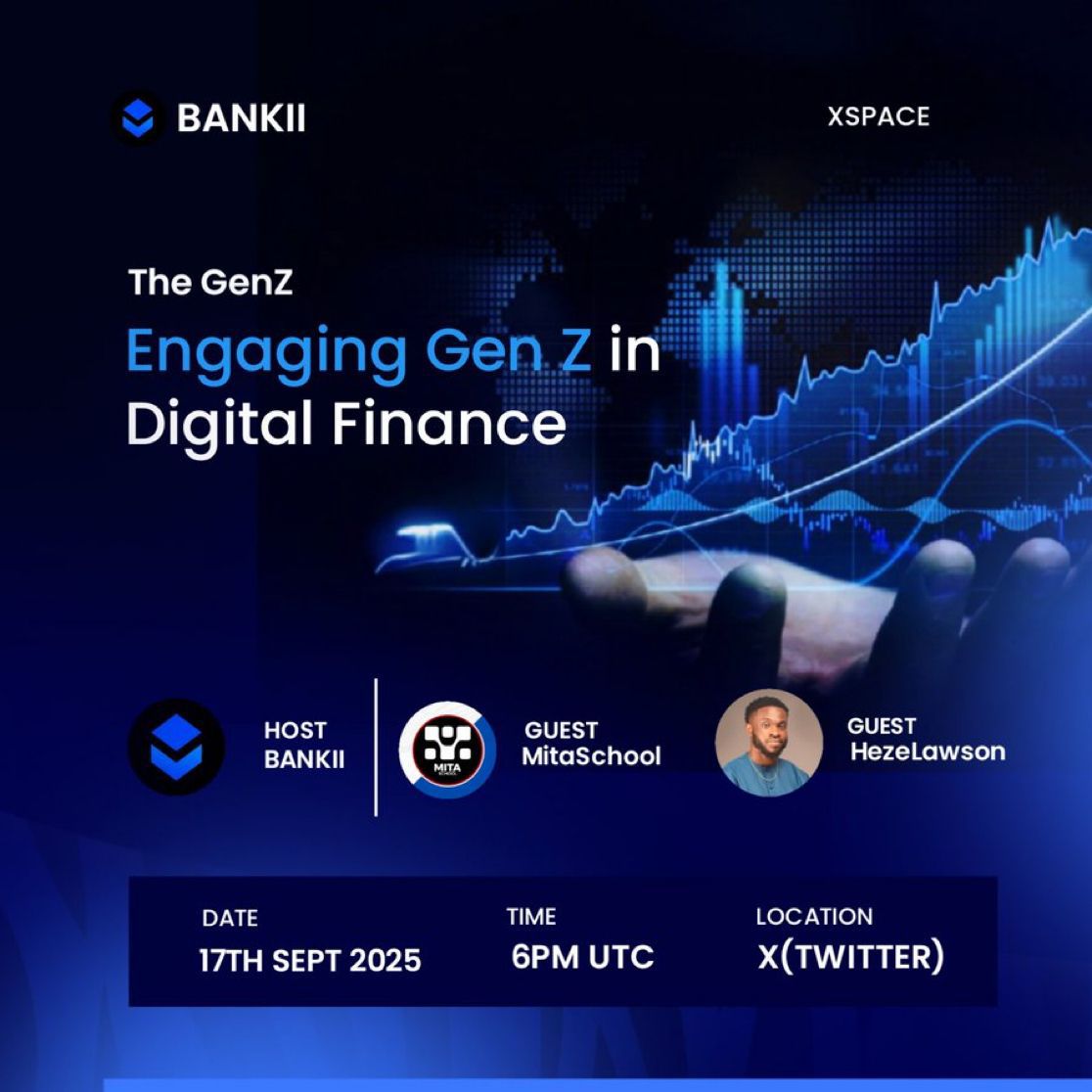
How Gen Z Can Thrive in Digital Finance
Posted on