
Remote Jobs You Can Do from Akwa Ibom Without Relocating: A Practical 2026 Guide
Living in Akwa Ibom does not mean your career has to be limited to jobs available within the state.
A person in Uyo, Eket, Ikot Ekpene, or Oron can work with a company in Lagos, serve a client in another Nigerian state, or compete for international opportunities without physically relocating. But there is an important distinction: remote work does not remove the need for skills. It changes where those skills can be applied.
The most realistic remote jobs in Nigeria are built around skills that can be delivered digitally, including web development, data analysis, digital marketing, writing, design, customer support, virtual assistance, software development, and other professional services.
For someone searching for remote jobs in Akwa Ibom, the real question is therefore not simply, “Where can I find an online job?” It is:
“What valuable skill can I develop that allows me to solve problems for an employer or client remotely?”
That shift in thinking matters.
Remote work is not an easy-money shortcut. You still need competence, reliable internet, a suitable device, professional communication, a portfolio where appropriate, and the discipline to deliver work without someone physically supervising you.
The good news is that these are learnable.
This guide explains the remote jobs you can realistically pursue from Akwa Ibom, the skills behind them, what beginners should understand before starting, and how structured digital skills training can help you prepare for the opportunities available in today’s economy.
Quick Answer: What Remote Jobs Can You Do from Akwa Ibom?
Some of the most realistic remote career paths available to people living in Akwa Ibom include:
- Web development and software development
- Data analysis
- Digital marketing and SEO
- Content writing and copywriting
- Graphic and UI/UX design
- Virtual assistance
- Customer support
- Social media management
- Video editing and content production
- Online research and administrative support
However, the availability and pay of these jobs vary significantly. Your location in Akwa Ibom does not automatically qualify you for remote employment. Your ability to demonstrate useful skills and produce reliable results is what makes you competitive.
For beginners, the strongest starting point is usually to choose one area, learn it systematically, practise consistently, build evidence of your ability, and then begin looking for suitable opportunities.
Table of Contents
- How Remote Work Has Changed Career Opportunities in Nigeria
- Why Remote Work Matters for People in Akwa Ibom
- What Makes a Job Suitable for Remote Work?
- Remote Jobs You Can Do from Akwa Ibom
- How Much Can You Earn from Remote Work?
- What You Need Before Starting
- How to Get a Remote Job Without Experience
- Why Skills Matter More Than Simply Searching for Jobs
- Common Mistakes Beginners Make
- How Mita School Helps Learners Prepare for Digital Opportunities
- Frequently Asked Questions
- Final Thoughts
How Remote Work Has Changed Career Opportunities in Nigeria
For a long time, the traditional idea of employment was straightforward.
You finished school, searched for companies in your city, submitted applications, attended interviews, and hopefully received an offer.
That model still exists, but digital technology has created another possibility.
Your employer does not necessarily have to be in the same city as you.
If your work can be completed, communicated, reviewed, and delivered online, there is a possibility that the relationship can work remotely.
This has particularly changed opportunities in fields where the main output is digital.
A web developer can build a website without sitting in the client’s office.
A designer can send completed designs electronically.
A digital marketer can manage campaigns from another city.
A data analyst can prepare reports and dashboards remotely.
A writer can research, write, edit, and submit articles without meeting the client physically.
That is the fundamental idea behind remote work.
But there is an important lesson here.
Remote work is not the career itself. It is the way the career is delivered.
Web development is a skill.
Data analysis is a skill.
Digital marketing is a skill.
Remote work is the working arrangement through which those skills may be delivered.
Understanding this prevents one of the biggest mistakes beginners make: searching endlessly for “remote jobs” without first becoming capable of doing the work.

Why Remote Jobs Matters for People in Akwa Ibom
Akwa Ibom has traditionally had strong connections to sectors such as government, oil and gas, education, hospitality, construction, and other local industries.
Those sectors remain important.
But digital work introduces another layer of opportunity.
A skilled professional in Uyo does not necessarily have to wait for a company in Uyo to advertise a suitable position.
They can develop a skill that businesses outside the state need and deliver that service digitally.
This does not mean local employment is irrelevant. It means the definition of the available market becomes broader.
Consider a business owner in Lagos who needs a website.
The business owner may not care whether the developer lives in Uyo or Abuja. What matters is whether the developer understands the requirement, can build the website properly, communicates professionally, meets deadlines, and provides the expected result.
That is where digital skills become powerful.
Mita School’s training model reflects this approach by focusing on practical digital skills, real projects, mentorship, and career direction for learners in Uyo and beyond. (Mita School)
For someone in Akwa Ibom, the opportunity is therefore not simply to find an online job.
It is to become good enough at a valuable digital skill that remote opportunities become accessible.
What Makes a Job Suitable for Remote Job?
Not every occupation can be performed remotely.
A surgeon needs to be physically present with a patient.
A construction worker needs to be at the construction site.
A mechanic needs access to the vehicle.
But many professional services can be performed primarily through computers and digital communication.
A job becomes more suitable for remote work when its main outputs can be created, managed, communicated, and delivered digitally.
Examples include:
| Career | Why It Can Be Remote |
|---|---|
| Web Development | Websites and applications are developed digitally |
| Data Analysis | Data, reports and dashboards can be handled online |
| Digital Marketing | Campaigns and digital channels are managed remotely |
| Content Writing | Research and writing can be delivered digitally |
| UI/UX Design | Designs can be created and shared online |
| Virtual Assistance | Administrative work can be managed through digital tools |
| Customer Support | Communication can happen through chat, email or calls |
| Video Editing | Video files can be edited and delivered digitally |
The important point is that remote suitability does not guarantee remote employment.
There may be competition for these positions.
Employers may require experience.
Some international companies may have restrictions based on location, time zone, tax arrangements, or employment regulations.
So the responsible way to approach remote work is to see it as an opportunity that requires preparation, not a guaranteed outcome.
Remote Jobs You Can Do from Akwa Ibom
1. Web Development
Web development is one of the strongest technical paths for people interested in remote work.
Businesses need websites, web applications, landing pages, e-commerce platforms, internal systems, and other digital products.
A developer can work on these projects without necessarily being physically present with the client.
Depending on your level, you may work as a:
- Front-end developer
- Back-end developer
- Full-stack developer
- WordPress developer
- Freelance web developer
The important thing is not simply knowing how to write code.
A professional developer needs to understand how to turn requirements into working digital products.
That means learning technologies, practising through projects, understanding version control, debugging problems, communicating with clients, and maintaining completed work.
Mita School’s Full Stack Web Development programme covers both front-end and back-end development, including HTML, CSS, JavaScript, React, PHP, Laravel, databases, Git and GitHub, and deployment basics. The programme also includes practical projects designed to build a portfolio. (Mita School)
Explore Full Stack Web Development at Mita School
For someone who enjoys technology, logic, and building things, web development can provide a strong foundation for pursuing remote opportunities.
2. Data Analysis
Businesses collect information constantly.
Sales figures.
Customer information.
Marketing performance.
Financial records.
Inventory data.
Website activity.
The challenge is turning that information into something useful.
That is where data analysts come in.
A data analyst may clean data, identify patterns, prepare reports, create dashboards, and communicate insights that help an organisation make better decisions.
This work can often be performed remotely because the analyst’s primary tools are digital.
Mita School’s Data Analysis programme covers areas including Excel, Power BI, Python and data visualisation, with practical projects designed around analysing and presenting information. (Mita School)
Explore Data Analysis at Mita School
This path can be particularly suitable for people who enjoy numbers, investigation, organisation, and problem-solving.
3. Digital Marketing
Almost every business wants customers.
Increasingly, those customers are discovering businesses through search engines, social media, websites, email, advertising, and other digital channels.
That creates demand for people who understand digital marketing.
A remote digital marketer may be responsible for:
- SEO
- Social media strategy
- Content marketing
- Email marketing
- Paid advertising
- Campaign analysis
- Lead generation
- Online brand visibility
But effective digital marketing is more than posting on Instagram.
A professional marketer needs to understand audiences, positioning, messaging, analytics, conversion, and business objectives.
Mita School’s Digital Marketing course covers areas including social media marketing, SEO, content strategy, email marketing, advertising, marketing analytics, and freelance and pitching strategies. (Mita School)
Explore Digital Marketing at Mita School
This can be a useful path for someone who enjoys communication, business, creativity, strategy, and understanding customer behaviour.
4. Content Writing and Copywriting
Writing is another remote-friendly career.
Businesses need written communication across almost every digital channel.
This includes:
- Blog articles
- Website content
- Product descriptions
- Email campaigns
- Social media copy
- Sales pages
- Scripts
- SEO content
But the writing market has changed.
Being able to write grammatically correct English is useful, but it is not enough to stand out.
Professional writers increasingly need to understand research, SEO, audience intent, brand voice, structure, editing, and the difference between informing and persuading.
For someone starting out, a portfolio is especially important.
Instead of simply saying, “I am a writer,” create examples that demonstrate what you can actually do.
5. UI/UX Design
UI/UX design combines visual thinking with problem-solving.
UI focuses heavily on the interface people see and interact with, while UX considers how the overall experience works.
Designers may create:
- Website interfaces
- Mobile app interfaces
- Wireframes
- Prototypes
- Design systems
- User flows
Because much of this work is performed using digital design tools and shared online, UI/UX can be suitable for remote teams and freelance arrangements.
It can be particularly attractive to people who enjoy creativity but also want to solve practical problems.
6. Virtual Assistance
Virtual assistants provide administrative and operational support to businesses and professionals.
Depending on the role, responsibilities can include:
- Managing calendars
- Organising emails
- Conducting research
- Scheduling meetings
- Preparing documents
- Managing basic customer communication
- Updating spreadsheets
- Coordinating tasks
Virtual assistance can be more accessible to beginners than some highly technical careers, but that does not mean it requires no skill.
Professional communication, organisation, time management, attention to detail, and familiarity with digital tools matter considerably.
7. Social Media Management
Businesses may have social media accounts but lack the time or knowledge to manage them effectively.
A social media manager may plan content, write captions, coordinate designs, monitor engagement, report performance, and help maintain the brand’s online presence.
However, social media management should not be confused with simply posting regularly.
A good social media manager needs to understand:
Why are we posting this?
Who are we trying to reach?
What action should the audience take?
What does the performance data tell us?
Those questions turn social media activity into marketing strategy.
8. Video Editing and Content Production
Video has become a major part of digital communication.
Businesses, creators, educational organisations, media companies, and brands all produce video content.
A video editor can work remotely because raw footage can be transferred digitally and completed projects can be delivered online.
Possible services include:
- Short-form video editing
- YouTube editing
- Corporate video editing
- Social media videos
- Educational content
- Motion graphics
Again, the opportunity depends on competence.
Learning software is only the beginning. Understanding pacing, storytelling, sound, visual hierarchy, and audience attention is what makes the skill commercially useful.
How Much Can You Earn from Remote Job?
This is where many remote-work articles become misleading.
There is no single amount that a person in Akwa Ibom will earn from a remote job.
Income can vary according to:
- Skill level
- Experience
- Industry
- Employer
- Country of the client
- Employment arrangement
- Portfolio quality
- Communication ability
- Negotiation
- Type of work
- Number of clients
A beginner and an experienced professional doing the same type of work can have completely different earnings.
International clients may also pay differently from Nigerian employers.
Freelancers may have months with multiple projects and months with fewer projects.
Therefore, it is better to think about building earning capacity rather than chasing a specific dollar figure.
The question should be:
What can I become good enough at that a business would be willing to pay me to do it?
That is a much healthier foundation for a remote career.
What You Need Before Starting Remote Work
You do not need an elaborate home office.
But you do need a workable setup.
A reliable computer
The specification depends on the career.
A designer or video editor may require more powerful hardware than someone doing basic administrative work.
Reliable internet
Remote work depends heavily on communication and access to online systems.
Internet reliability therefore matters.
Professional communication
Being technically skilled is not enough.
You need to write clear messages, understand instructions, ask useful questions, attend meetings when required, and communicate delays honestly.
A portfolio
For many digital careers, a portfolio can demonstrate competence better than simply listing a skill on your CV.
A developer can show websites.
A designer can show interfaces.
A writer can show published or sample work.
A data analyst can demonstrate dashboards and analysis projects.
A professional online presence
Depending on your field, this may include LinkedIn, GitHub, Behance, a personal website, or another relevant professional platform.
The goal is simple:
Make it easy for someone to understand what you can do.
How to Get a Remote Job Without Experience
This is one of the hardest questions beginners ask.
“How can I get experience when nobody wants to hire me because I don’t have experience?”
The answer is to create evidence of ability before employment.
If you want to become a web developer, build websites.
If you want to become a data analyst, analyse datasets and create dashboards.
If you want to become a digital marketer, develop sample campaigns and strategies.
If you want to become a designer, create interface concepts and prototypes.
These projects do not pretend to be professional employment.
They demonstrate that you can practise the skill.
Then look for smaller opportunities.
Your first project may not be with an international company.
It could be helping a local business.
It could be assisting a small organisation.
It could be a freelance project.
It could be a personal project that solves a realistic problem.
The objective is to gradually move from learning → practising → demonstrating → delivering → getting paid.
That progression is more realistic than expecting a high-paying remote job immediately after completing a course.
Why Skills Matter More Than Simply Searching for Jobs
There is a major difference between wanting a remote job and being prepared for one.
A job search can only take you as far as your qualifications and evidence of ability allow.
This is why continuously refreshing job boards without improving your skills can become frustrating.
Suppose two candidates apply for the same remote web development position.
Candidate A writes:
“I am passionate about web development.”
Candidate B presents several functioning websites, explains the technologies used, links to their GitHub projects, demonstrates their problem-solving process, and communicates clearly.
The second candidate has something important:
evidence.
This is why structured learning can be useful.
At Mita School, the emphasis is on practical learning, projects, mentorship, and career direction rather than simply attending classes. Its current programmes include Web Development, Data Analysis, Digital Marketing, UI/UX Design, Cybersecurity and other digital skills. (Mita School)
The purpose of training should not be to make students feel like they have “finished learning.”
It should help them become more capable of applying what they have learned.
Common Mistakes Beginners Make
Chasing every trending skill
One month it is cybersecurity.
The next month it is AI.
Then web development.
Then data analysis.
Then something else.
Technology changes quickly, but constantly switching paths prevents mastery.
Choose deliberately.
Expecting immediate income
Learning a skill does not automatically produce income.
You need practice, evidence, positioning, applications, networking, and persistence.
Collecting certificates without building projects
A certificate can show that you completed training.
A portfolio can show what you can actually do.
Ideally, build both where appropriate.
Applying for jobs you are not prepared for
Remote opportunities are competitive.
Do not apply blindly to every vacancy containing the word “remote.”
Read the requirements.
Understand the role.
Assess your current ability.
Then apply where there is a realistic fit.
Ignoring communication
A highly skilled professional who cannot communicate clearly can still be difficult to work with.
Remote teams depend heavily on written and verbal communication because colleagues cannot simply walk across the office and ask a question.
How Mita School Helps Learners Prepare for Digital Opportunities
There is a temptation to reduce digital skills training to software and technical lessons.
That misses something important.
For a beginner, one of the biggest challenges is often not access to information. It is knowing what to learn, in what order, how to practise, and what to do with the skill afterwards.
That is where structure matters.
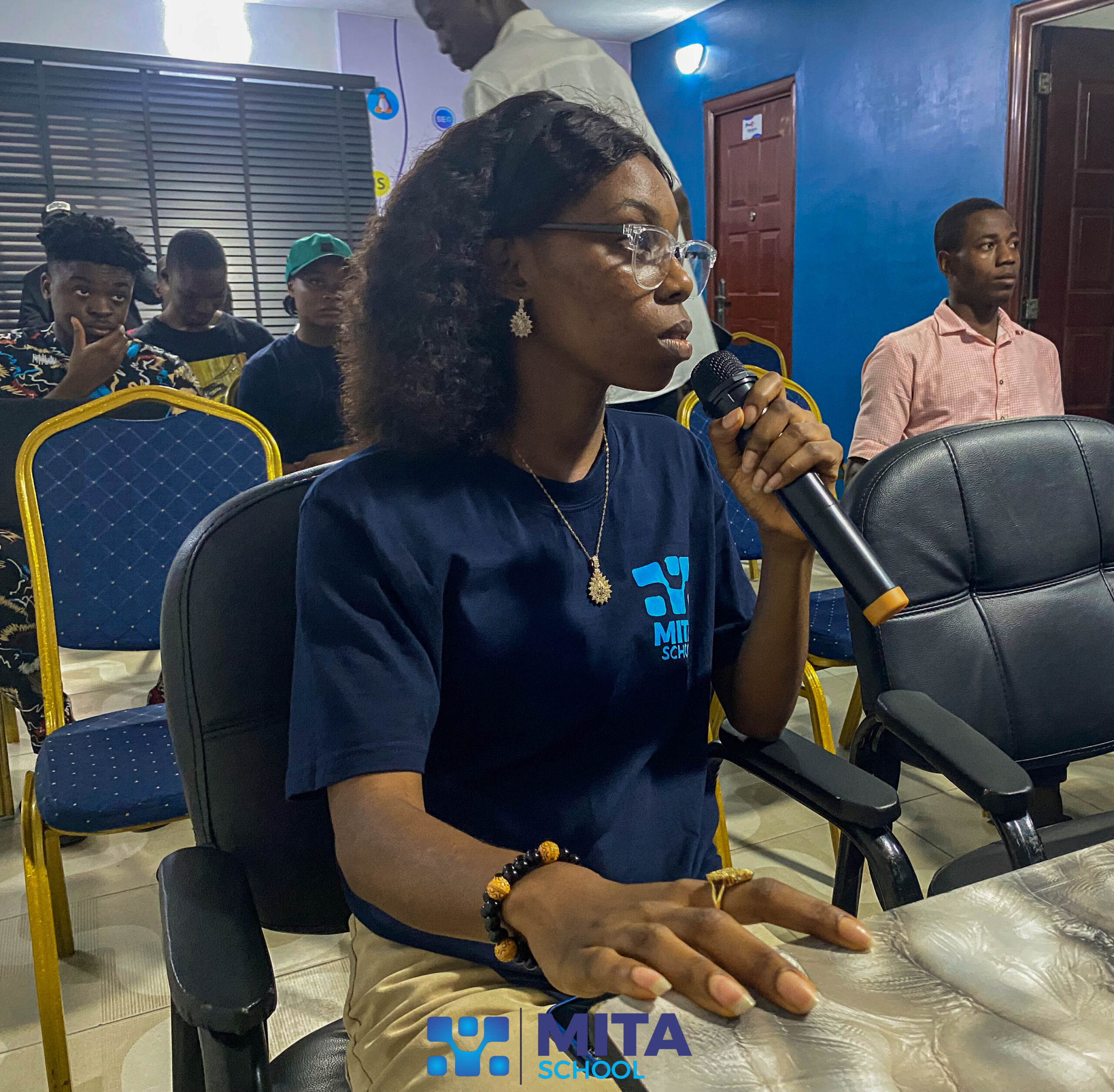
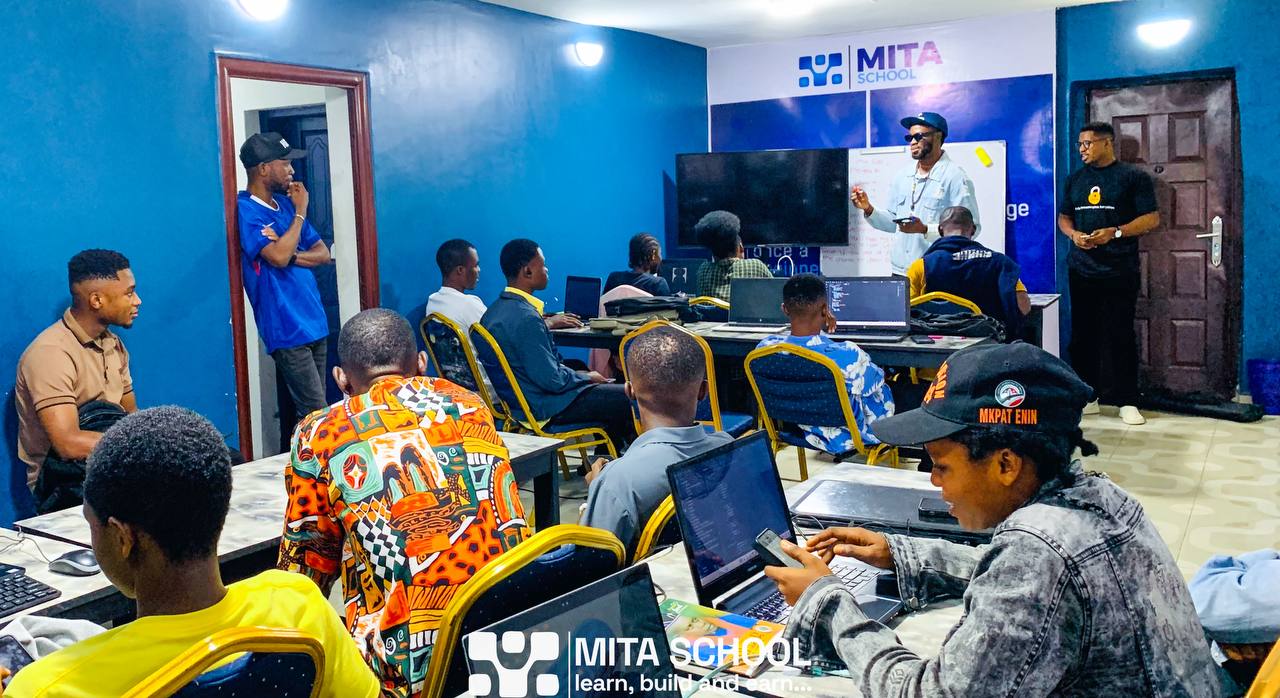
Mita School is based in Uyo, Akwa Ibom, and positions its training around practical digital skills, hands-on learning, mentorship, projects, and career-focused direction. (Mita School)
That positioning is particularly relevant to someone interested in remote work because the objective should not simply be to attend a technology class.
You need to develop a skill that can eventually be applied to real problems.
For example, someone interested in web development can build websites and web applications.
Someone interested in data analysis can work with datasets, create dashboards, and communicate insights.
Someone interested in digital marketing can learn how to develop campaigns, understand audiences, analyse performance, and improve online visibility.
Mita School’s role should therefore be understood as a starting point in the process.
The school can provide structure, learning, practical projects, mentorship, and direction.
But the learner still has to practise.
They still have to build.
They still have to improve.
They still have to apply.
And eventually, they still have to prove their value in the marketplace.
That distinction matters because no responsible training institution should suggest that enrolling in a course automatically guarantees employment or income.
Training creates preparation. The learner must turn that preparation into capability.
Frequently Asked Questions
Can I get a remote job while living in Akwa Ibom?
Yes. People living in Akwa Ibom can pursue remote roles where the employer’s requirements, employment arrangement, and location policies permit remote work from Nigeria. Your competitiveness will depend largely on your skills, experience, portfolio, communication, and ability to meet the role’s requirements.
What are the best remote jobs in Akwa Ibom for beginners?
Potential starting points include virtual assistance, content writing, social media management, customer support, digital marketing, and some entry-level digital roles. More technical careers such as web development and data analysis can also be pursued by beginners, but they require dedicated learning and practice.
Do I need a university degree to work remotely?
Not every remote role requires a university degree. Requirements depend on the employer and profession. In many digital careers, demonstrated skills, experience, portfolio projects, communication, and relevant qualifications can be important alongside or instead of a traditional degree.
Can I earn in dollars from Akwa Ibom?
It is possible to work with international clients or companies that pay in foreign currencies, depending on the role, contract, payment arrangement, and eligibility requirements. However, earning in dollars is not automatic simply because you work remotely.
How long does it take to become ready for remote work?
There is no universal timeline. It depends on the skill, your starting point, learning schedule, practice, and how quickly you can demonstrate competence. Some skills have shorter entry paths, while technical careers may require considerably more time to develop.
Final Thoughts: Remote Jobs Starts With Becoming Useful
The most important thing to understand about remote jobs in Akwa Ibom is that the opportunity is real, but it should not be romanticised.
Remote work is not a shortcut around competence.
It is not a guaranteed way to earn dollars.
It is not simply about creating an account on a freelance platform and waiting for clients.
It is a different way of participating in the labour market.
And participation requires value.
If you can build something, analyse something, design something, market something, write something, manage something, solve something, or improve something that another person or organisation genuinely needs, you have something that can potentially be delivered beyond your immediate location.
That is the real opportunity.
For young people in Uyo and other parts of Akwa Ibom, this should change the way the conversation around digital careers is approached.
Don’t start with:
“Which remote job will make me money?”
Start with:
“Which valuable problem do I want to become capable of solving?”
Then choose the skill that helps you solve it.
Learn it properly.
Practise it.
Build projects.
Get feedback.
Create evidence.
Work with real people.
Improve your communication.
Start small.
And gradually position yourself for larger opportunities.
That is how a person moves from simply wanting a remote job to becoming someone who can actually compete for one.
Build the Skill Before Chasing the Opportunity
Mita School provides practical, structured digital skills training in Uyo for beginners, students, graduates, professionals, and people looking to change career direction.
Whether your interest is Web Development, Data Analysis, Digital Marketing, UI/UX Design, Cybersecurity, or another digital career, the first step is to choose a path that fits you and start building genuine competence.
Start your digital skills journey with Mita School
Because ultimately, the goal is not simply to work remotely.
The goal is to become valuable enough that where you live does not unnecessarily limit where your skills can take you.